 Open
Apartments by the night
Several apartments in the building are rented out by the night. It is the easiest way to get inside and see the grand marble entrance halls.

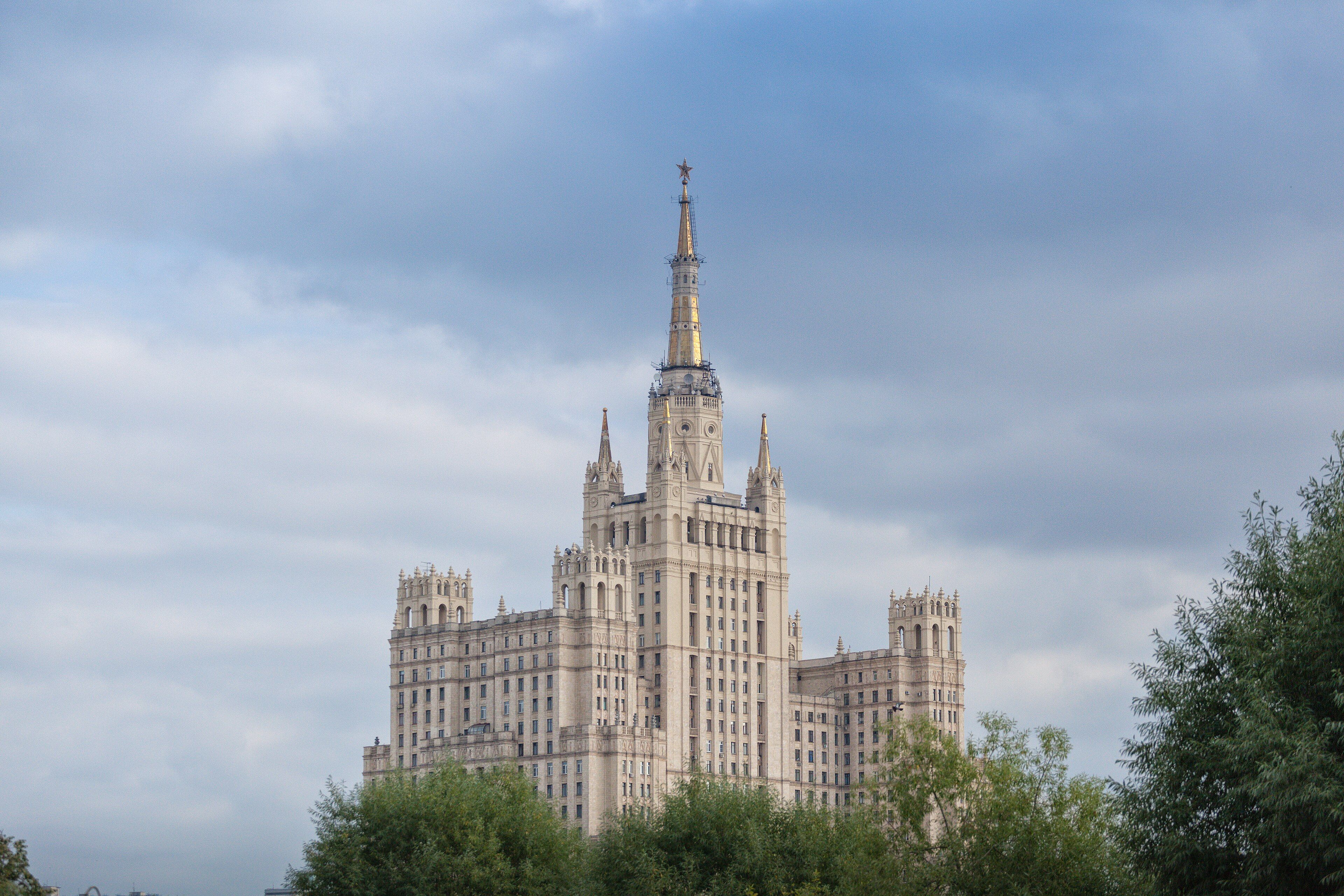
A residential skyscraper on the Garden Ring, built for aircraft designers and pilots. This is the building shown from outside in the film Moscow Does Not Believe in Tears.
Outside
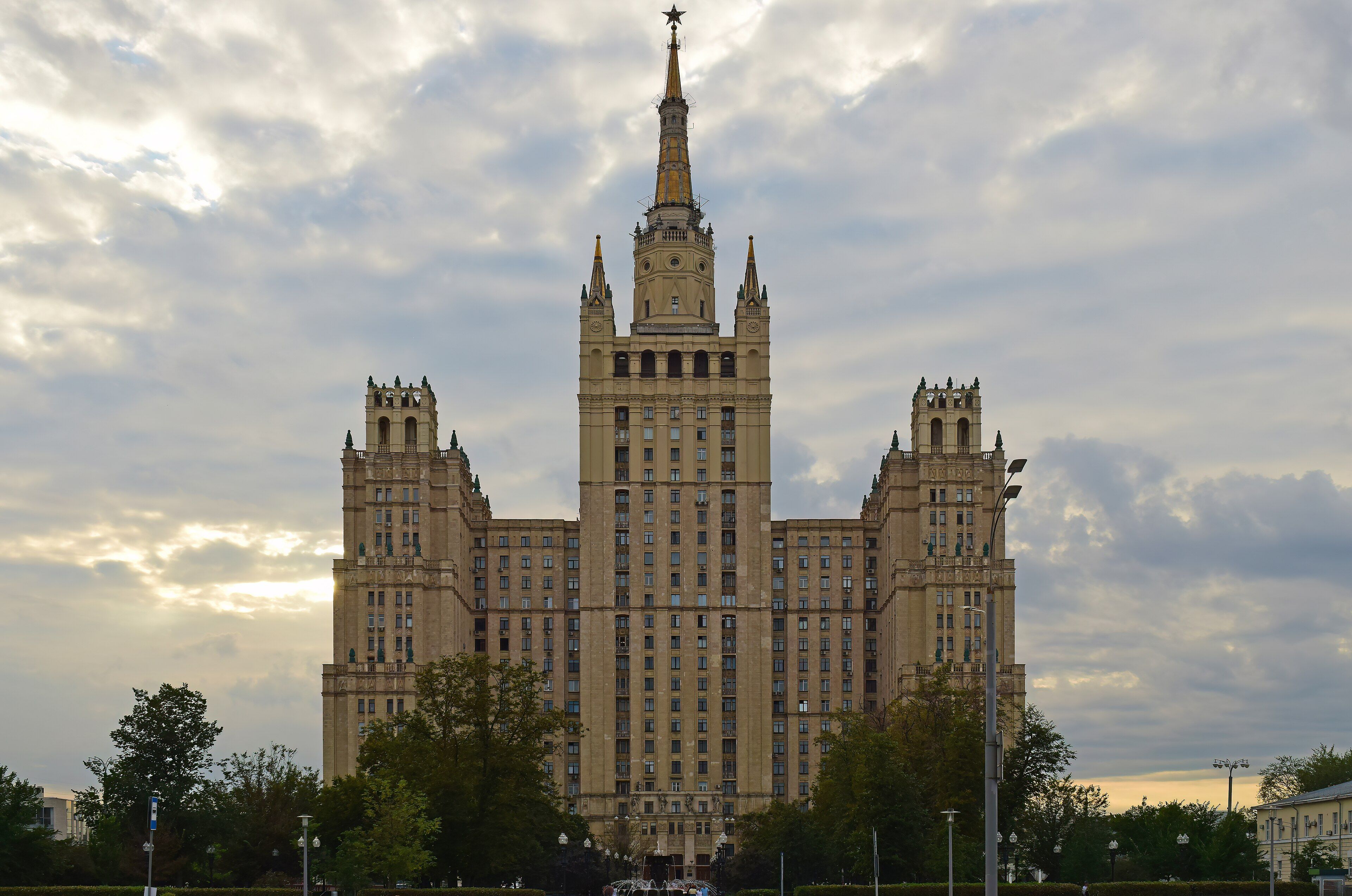
The skyscraper on Kudrinskaya Square © Юрий Д.К., CC BY 4.0
The Kudrinskaya Square skyscraper and its side blocks © ᴀɴᴅʏ ᴏɴᴇ, CC BY-SA 2.0
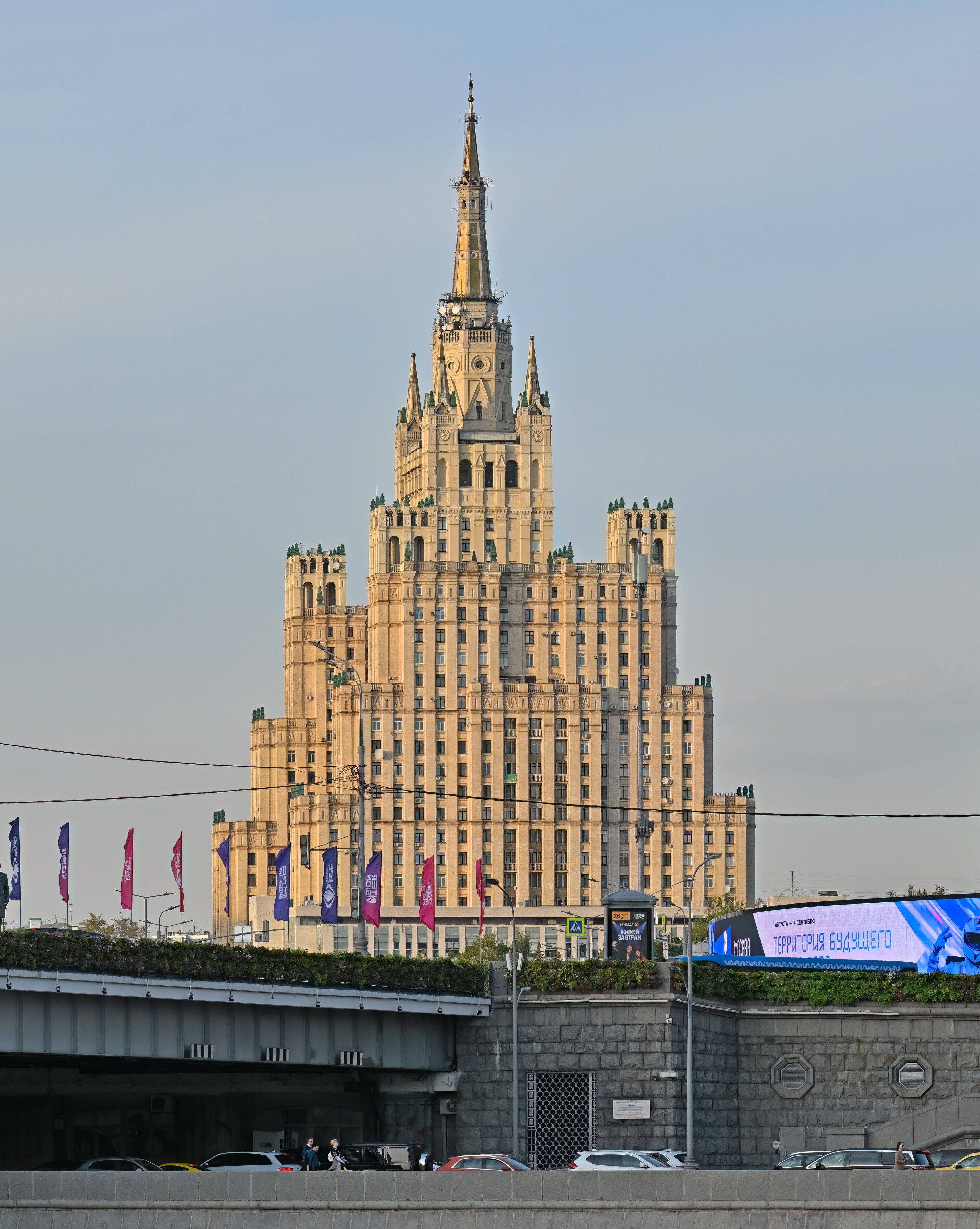
The Kudrinskaya Square skyscraper at sunset © Юрий Д.К., CC BY 4.0
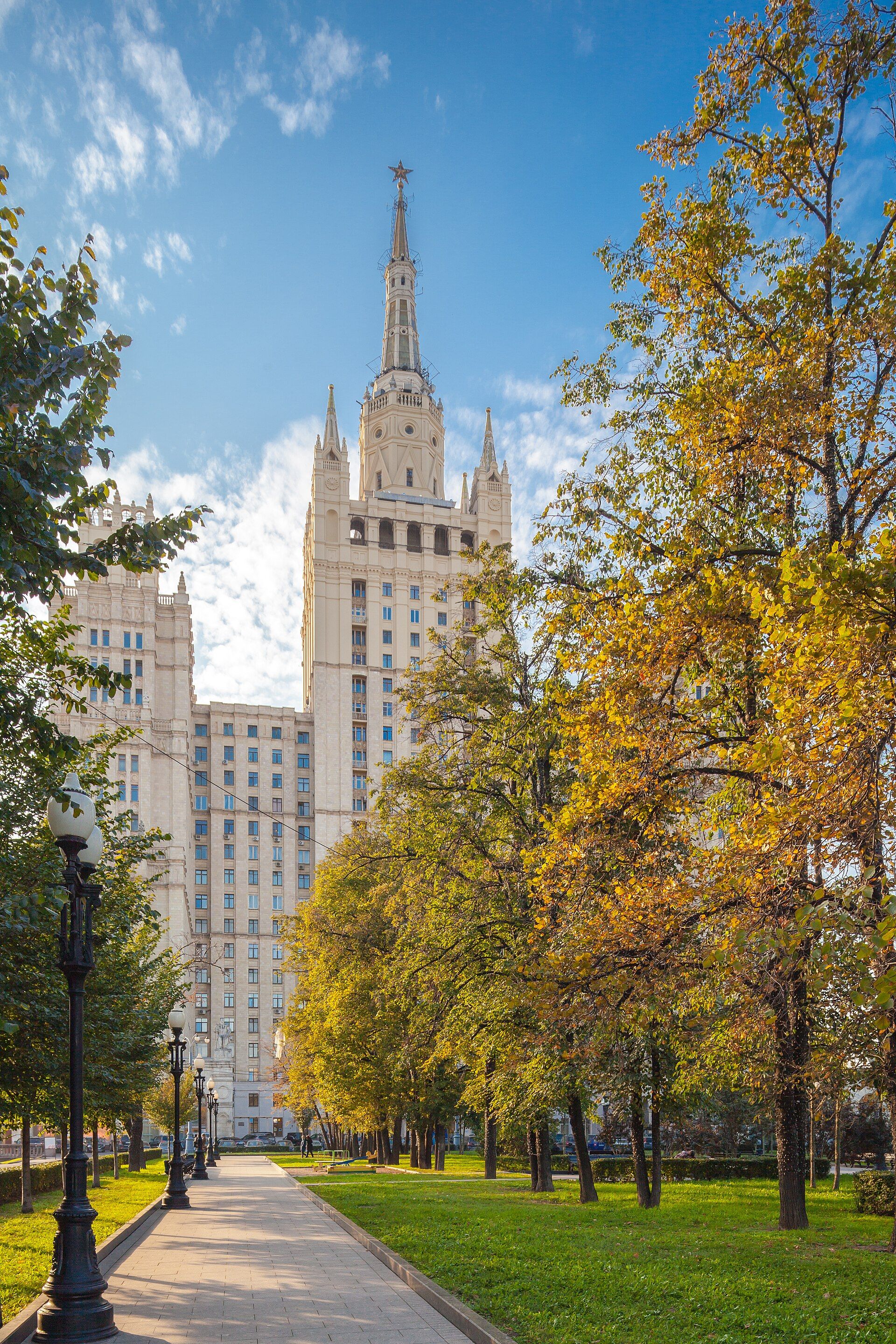
The Kudrinskaya Square skyscraper in autumn © Sergey Norin from Moscow, Russia, CC BY 2.0
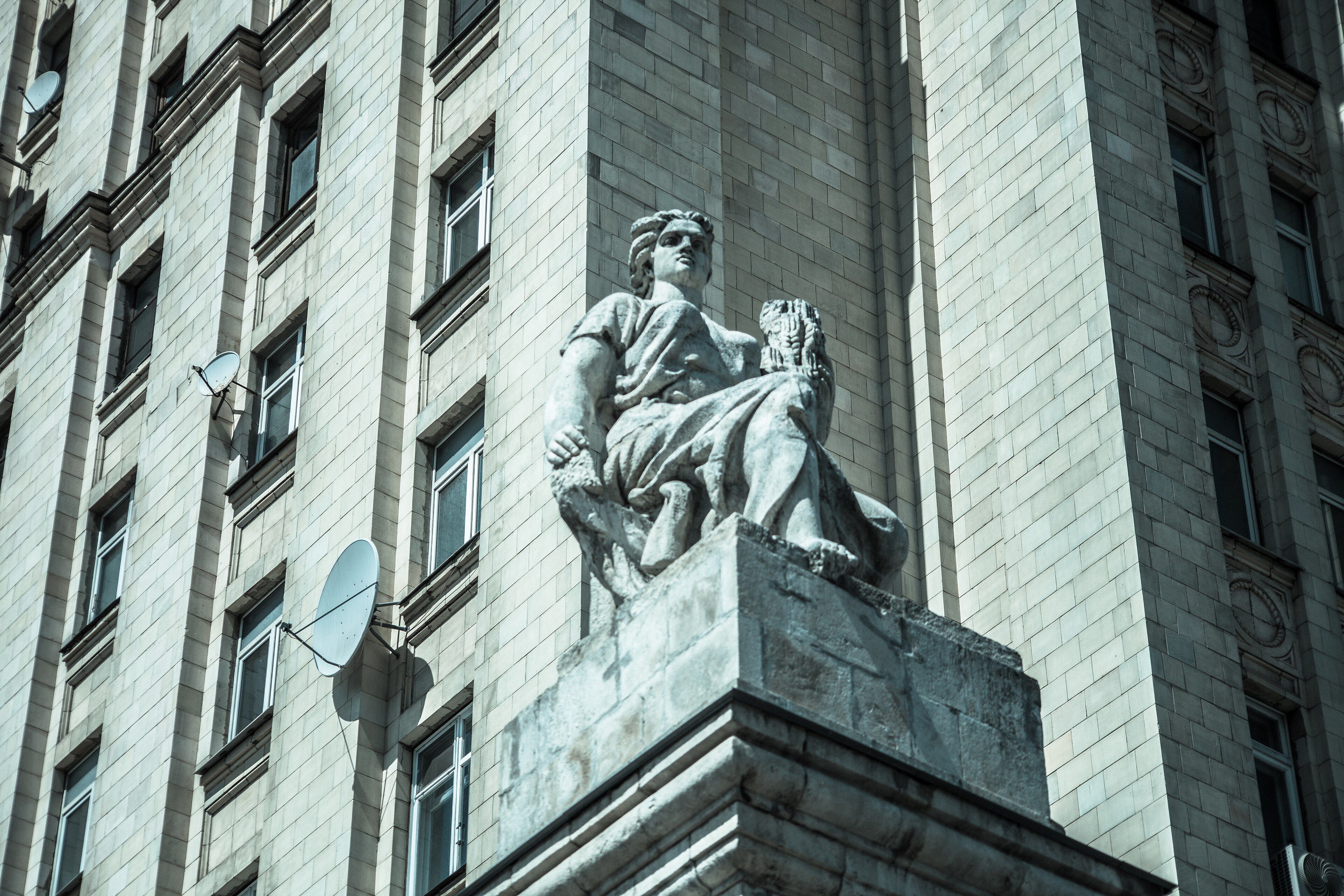
Sculptures on the skyscraper’s facade © AKfounder, CC BY-SA 4.0
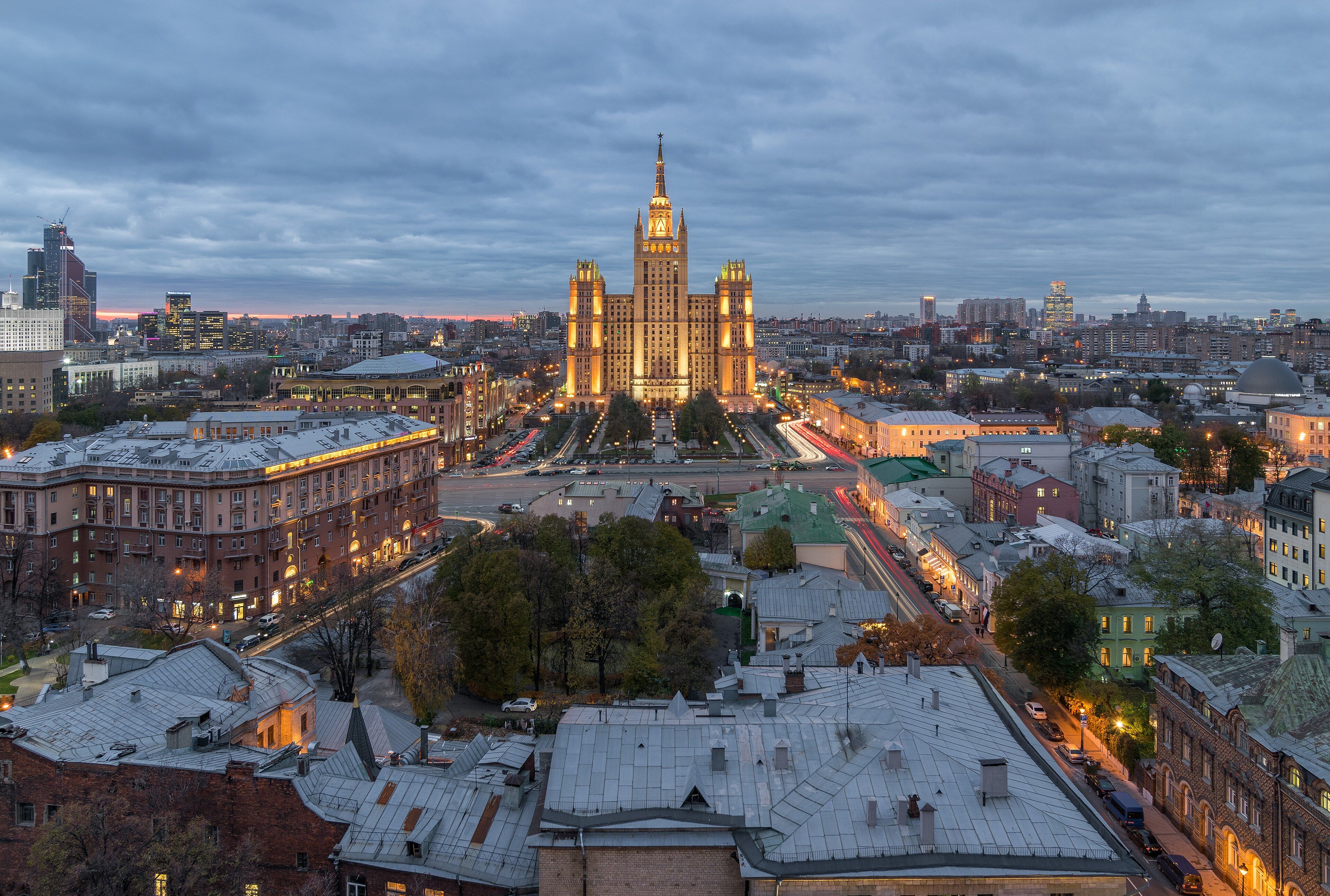
The skyscraper above the rooftops of Presnya © Олег Токарев, CC BY-SA 4.0
History
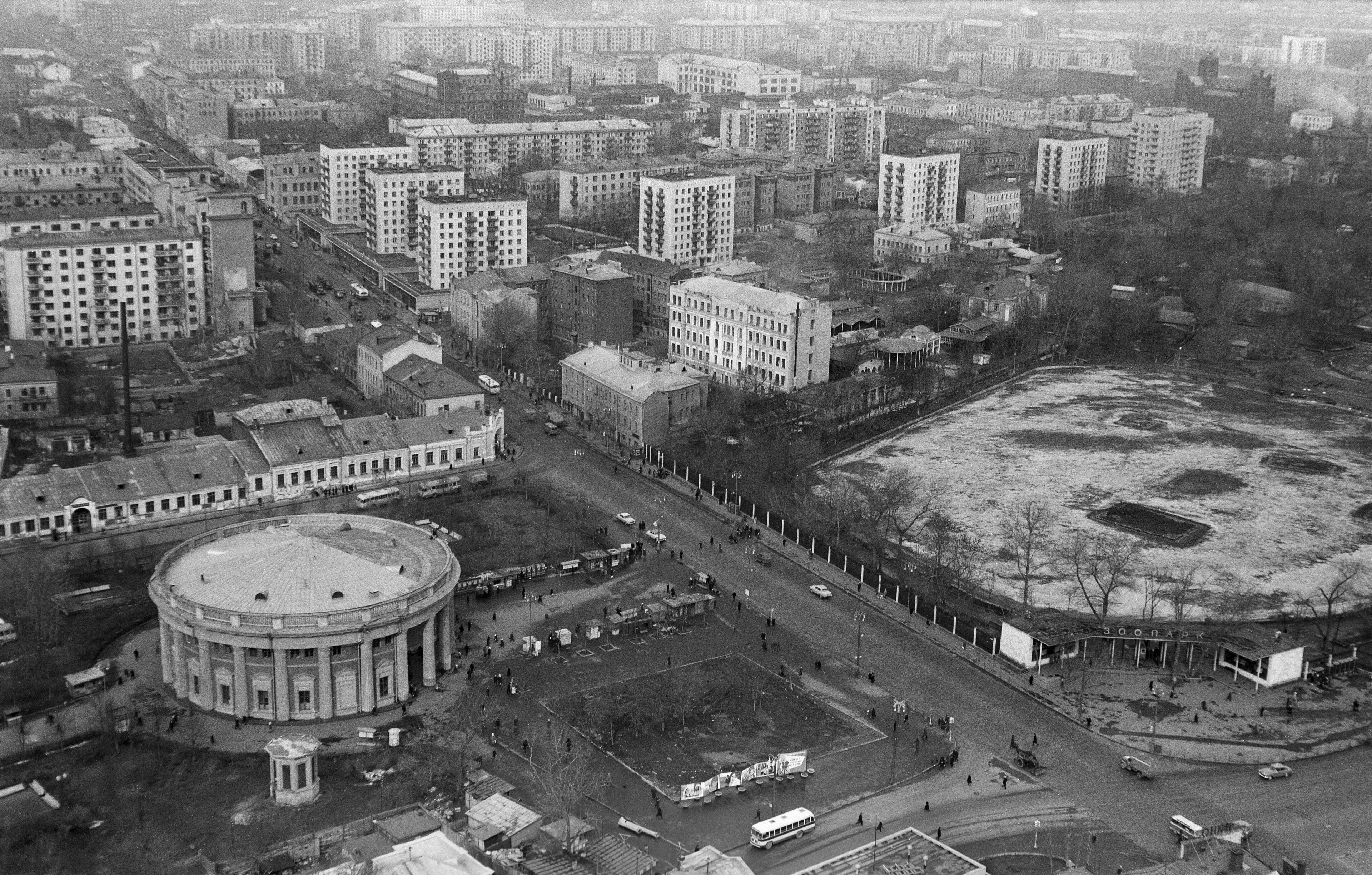
The Kudrinskaya Square skyscraper between 1967 and 1971 © РИА Новости / Юрий Артамонов, CC BY 4.0
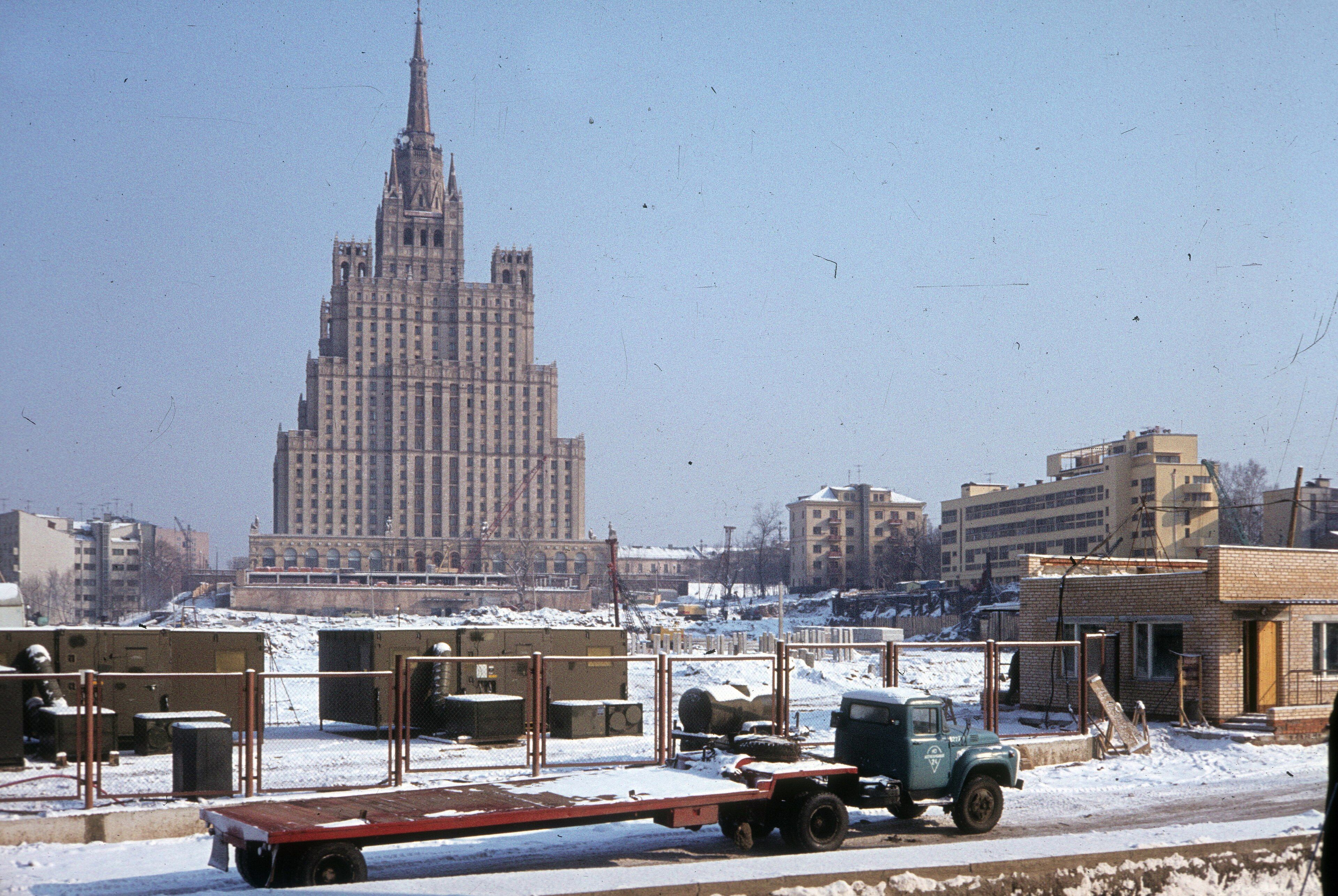
The Kudrinskaya Square skyscraper between 1967 and 1971 © Fortepan, Ormos Imre Alapítvány, CC BY-SA 3.0
The building went up from 1948 to 1954 on Vosstaniya Square, as Kudrinskaya Square was called from 1925 to 1992. That is why many Muscovites still call it “the skyscraper on Vosstaniya Square”.
The apartments went mostly to aviation industry workers, aircraft designers and pilots. Hence the building’s other name, the “aviators’ house”.
© РИА Новости / Юрий Артамонов, CC BY 4.0The ground on the site slopes, so the skyscraper was set on a massive base, a stylobate. The neighbouring zoo was to be moved to southwest Moscow and the building surrounded by a park, but the plan was never carried out.
When Khrushchev began his fight against architectural excess in 1955, the building was already finished and kept all its decoration.
© Fortepan, Ormos Imre Alapítvány, CC BY-SA 3.0The building mixes many styles. There are sculptures and balustrades with obelisks, stained glass, columns, openwork turrets, Renaissance details and roof terraces on the side blocks with views over the city.
The facades carry statues of workers, peasant women, athletes and musicians. Many of them were made by the sculptor Nikolai Nikogosyan.
It is an apartment building, so you cannot enter the stairwells without a resident. But the ground floor has cafés, shops and a post office.
Open
Several apartments in the building are rented out by the night. It is the easiest way to get inside and see the grand marble entrance halls.
By booking
The building was nicknamed the “aviators’ house” because pilots, aircraft designers and cosmonauts received apartments here. But architects and performers lived here too.
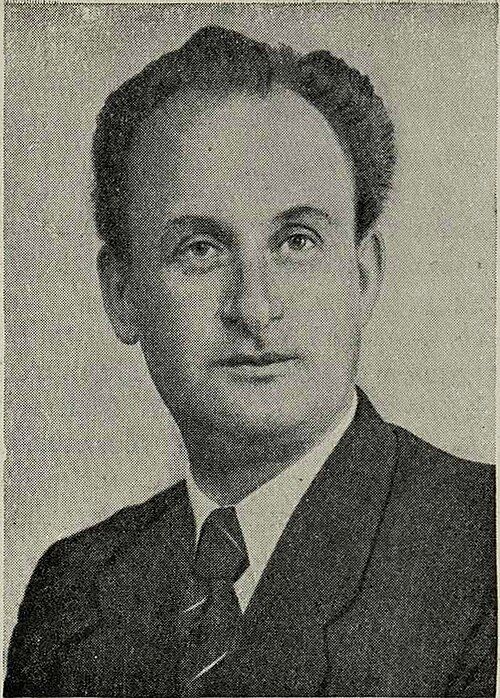
Architect of the building
One of the skyscraper’s architects, later chief architect of Moscow and the author of Novy Arbat. He moved into the building he had designed.
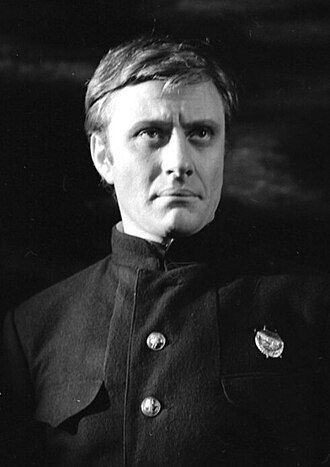
Actor
Star of The Diamond Arm, The Twelve Chairs and An Ordinary Miracle, and one of the country’s best-loved actors.
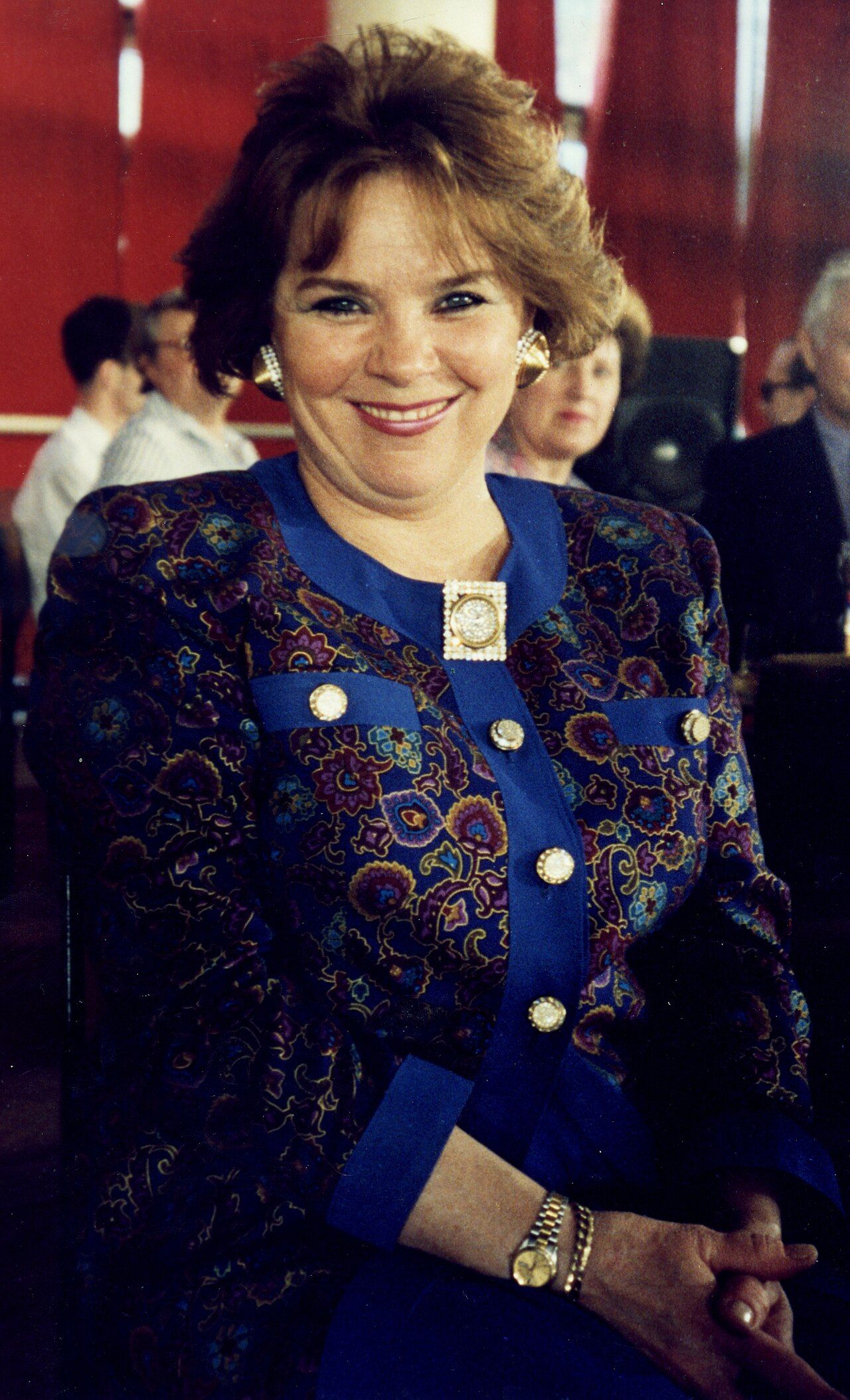
Actress
Lead actress of the film The Hussar Ballad and wife of Andrei Mironov.
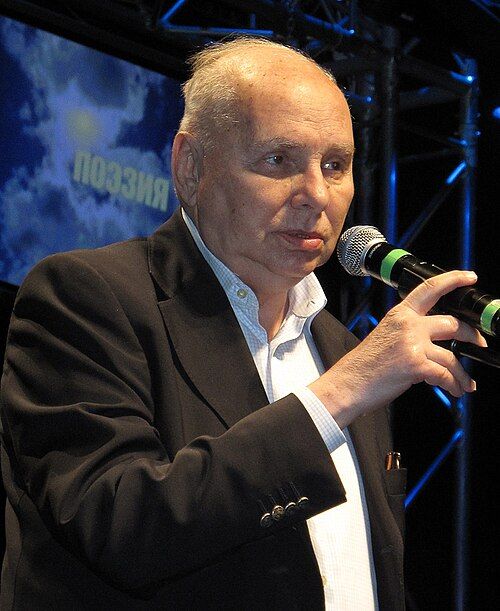
Theatre critic and TV presenter
Creator and host of the TV programme My Silver Ball about the lives of great actors.
Most apartments went to aviation industry workers, test pilots and cosmonauts, as well as athletes and actors.
Everyone who has seen the great Soviet film about Moscow knows this building.

Katerina and her friend look after a professor’s apartment in a Stalinist skyscraper. The exterior shots show the Kudrinskaya Square building, while the interiors were filmed in the Kotelnicheskaya skyscraper.
The United States Embassy stands next to the skyscraper. It is said that during the Cold War the upper floors held equipment aimed at the embassy. This is often repeated, but no documents are publicly available.
The upper floors of the tower are closed to residents. It is said that the windowless 23rd floor is where that equipment stood. In fact the residential floors are topped by technical floors, and the 25th floor has a gallery with arched windows.
The building was meant to be the most luxurious of all, but it had its flaws. The rubbish chutes opened straight into the kitchens, and many residents eventually bricked them up.
The skyscraper stands on a wide square, so it is easy to photograph in full.
From the opposite side of the Garden Ring you see the whole building together with its side blocks.
From the zoo entrance the skyscraper rises above the trees. Summer and autumn give especially warm shots.
If you walk to the building from Novy Arbat, the tower stays in view at the end of the Garden Ring for a long time. A good shot with a telephoto lens.
Near the skyscraper you can stay in the building itself or in the hotels around it.
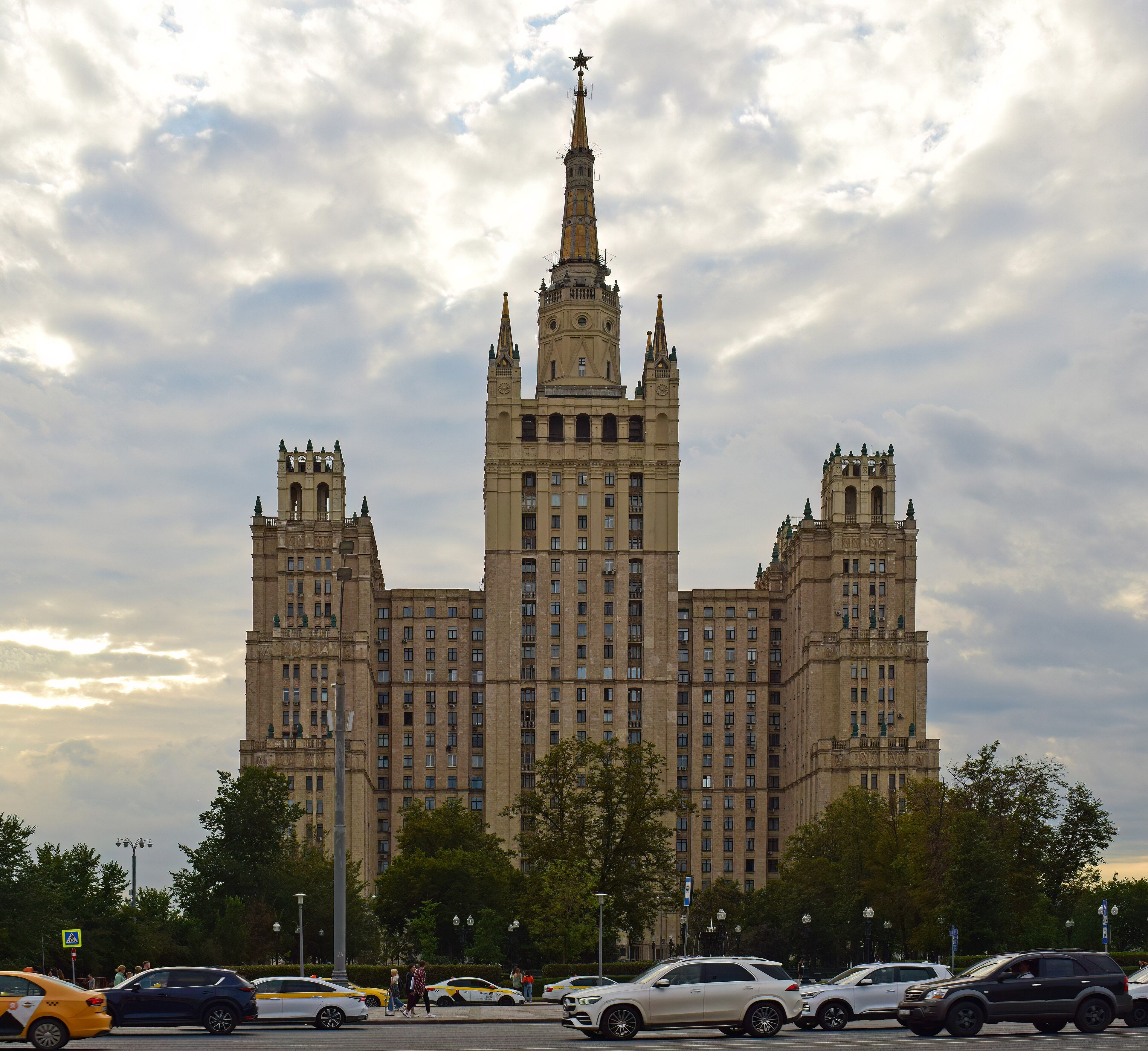
Apartments by the night in the Kudrinskaya Square building.
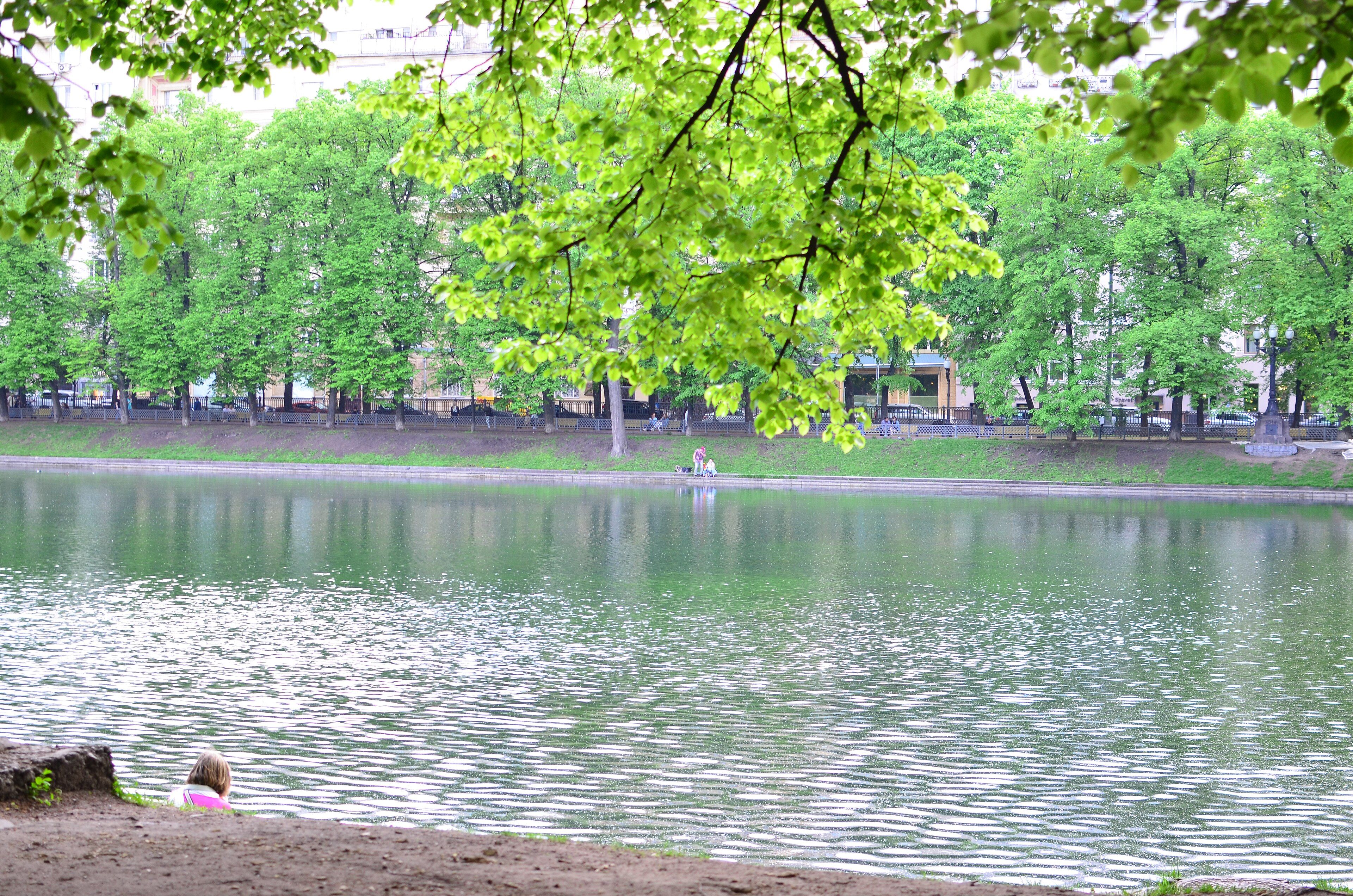
A quiet district with cafés and old mansions, a 10 minute walk from the skyscraper.
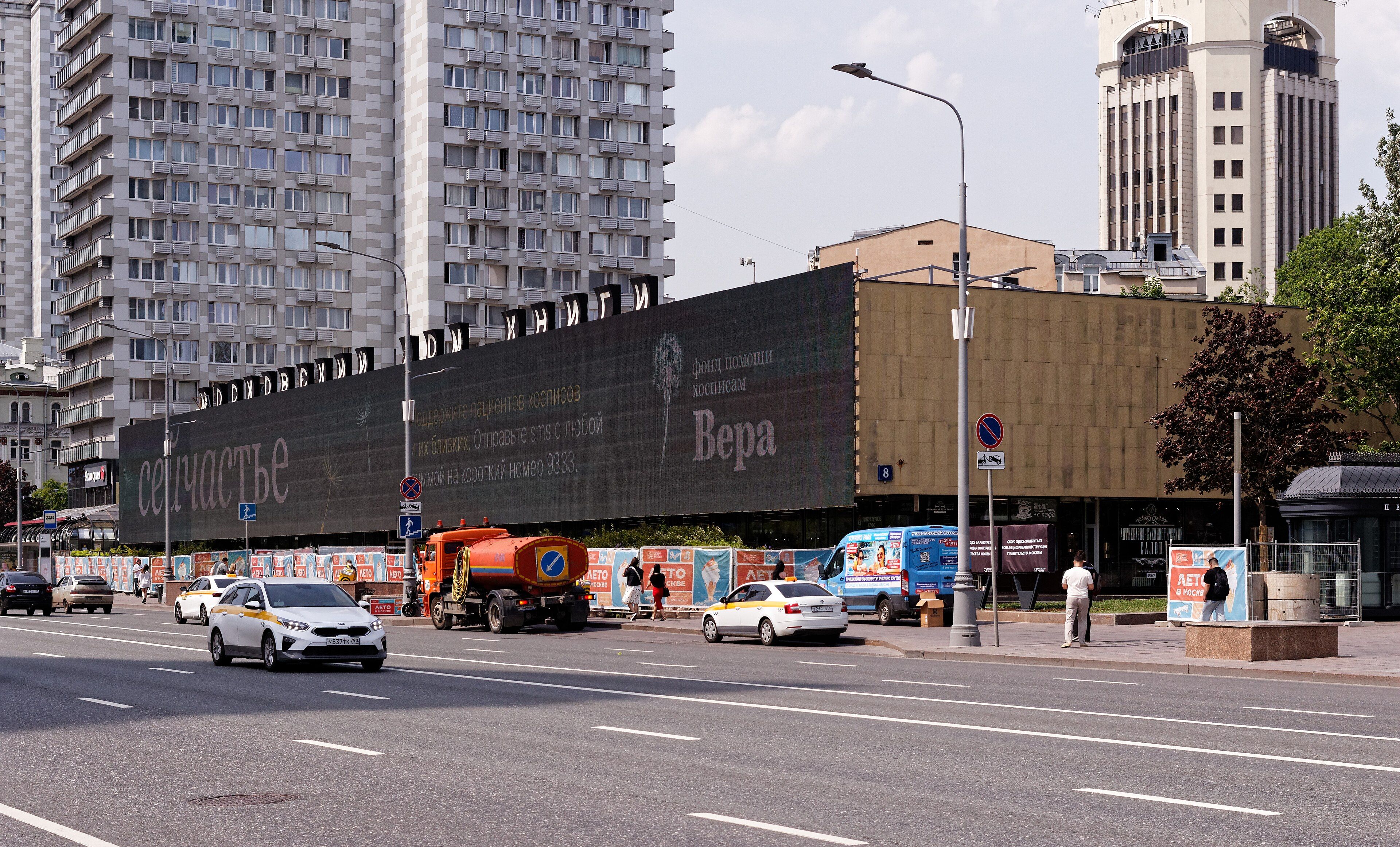
A 15 minute walk along Novinsky Boulevard, with the metro and cafés nearby.
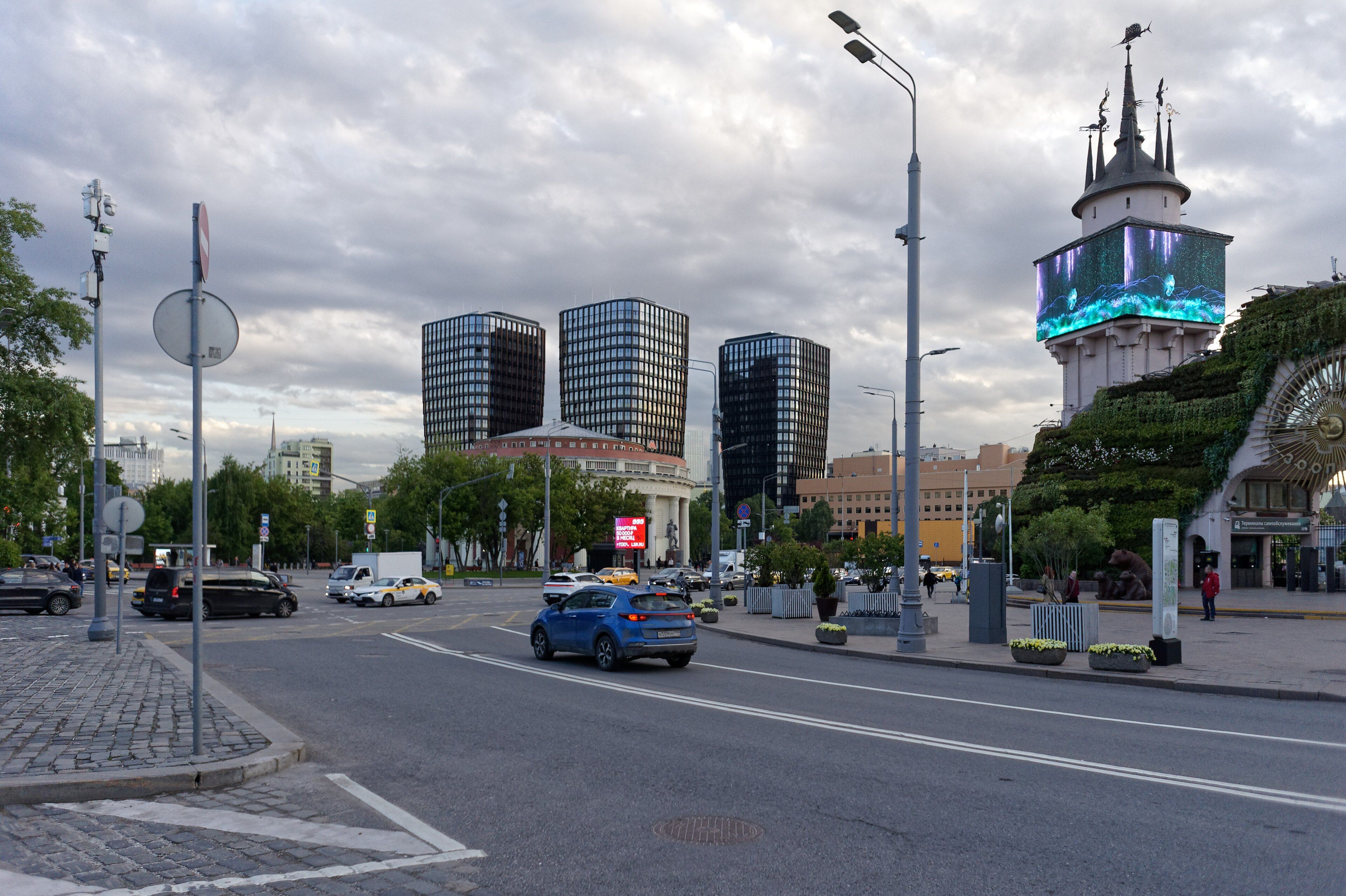
The area around the zoo and Barrikadnaya metro, a few minutes from the skyscraper.
Walking times are from the skyscraper.
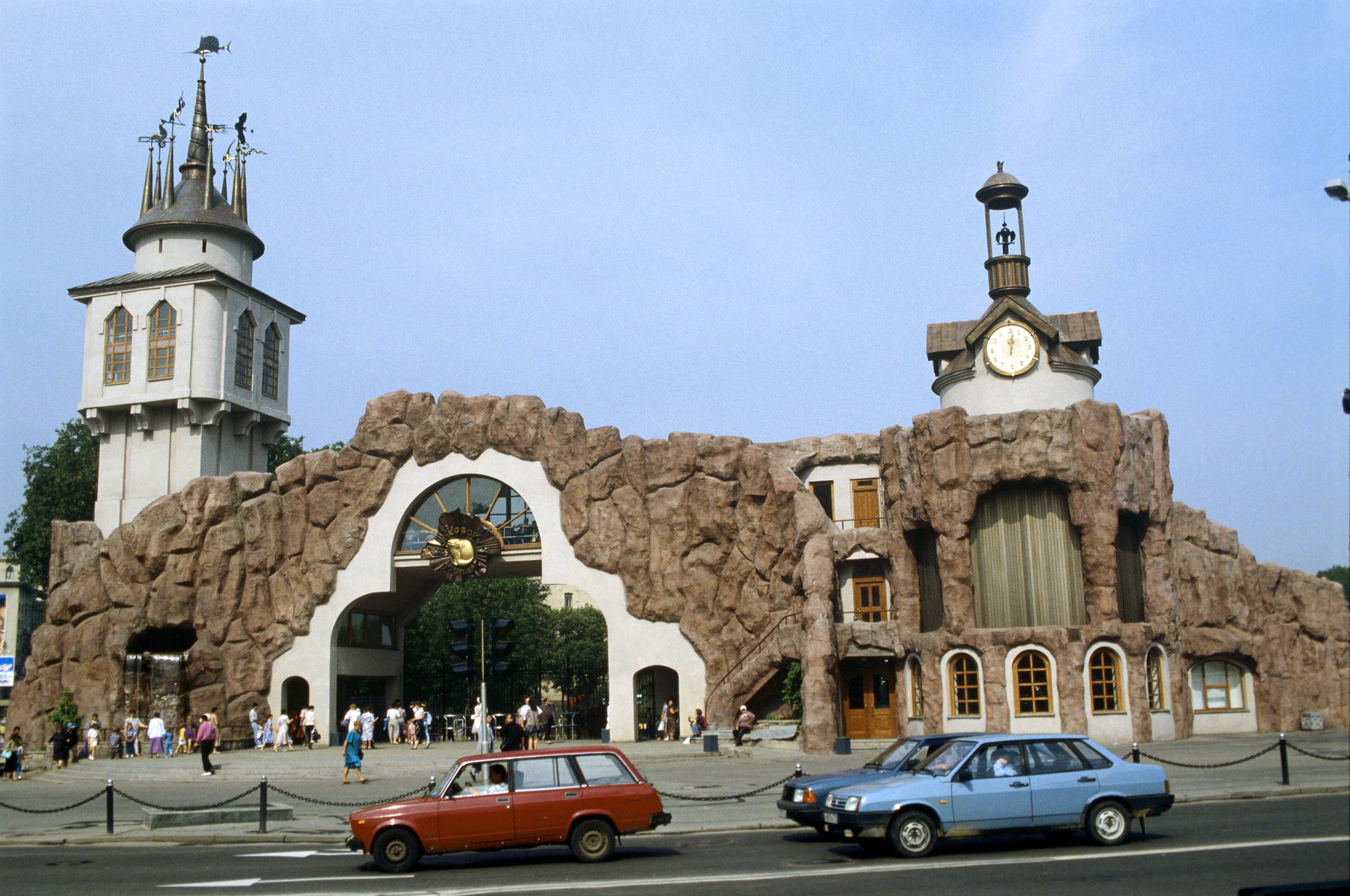
The map loads when you tap the button. This keeps the page fast.
Russia, Moscow, Kudrinskaya Square 1
7Barrikadnayaabout 3 minutes
Metro line 7 (purple).
5Krasnopresnenskayaabout 5 minutes
Metro line 5 (brown).
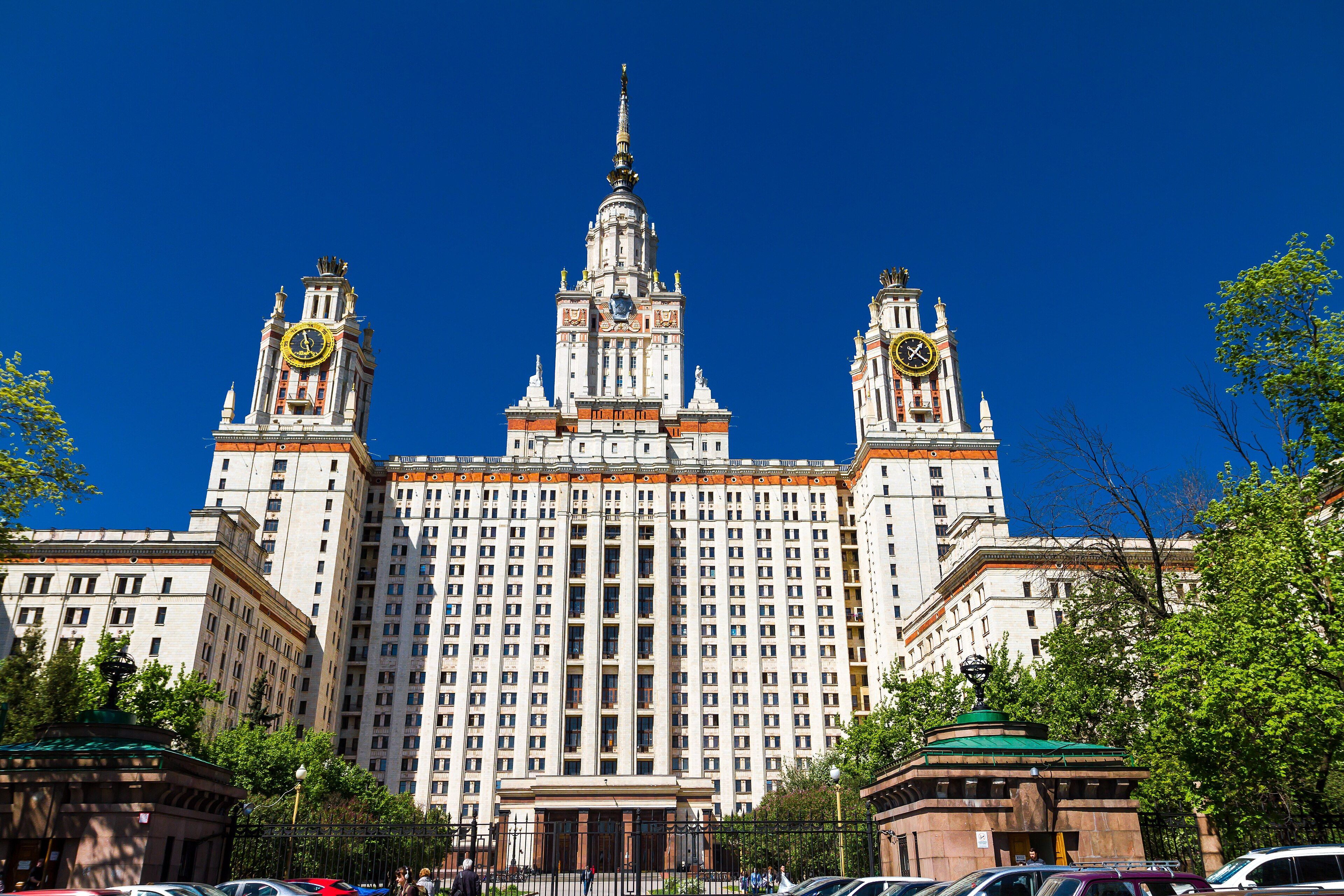 Moscow State University Main Building
2
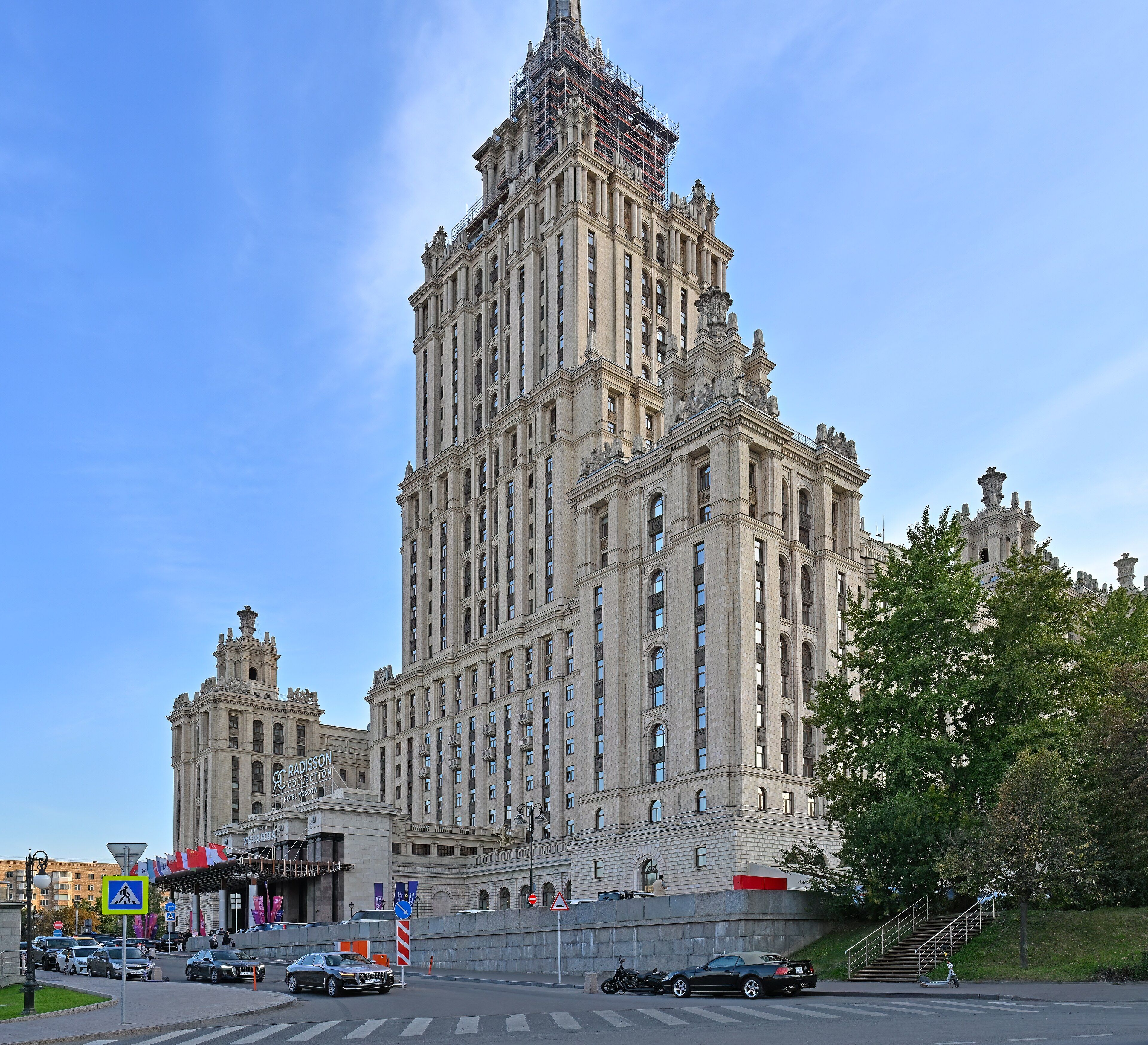 Hotel Ukraina
3
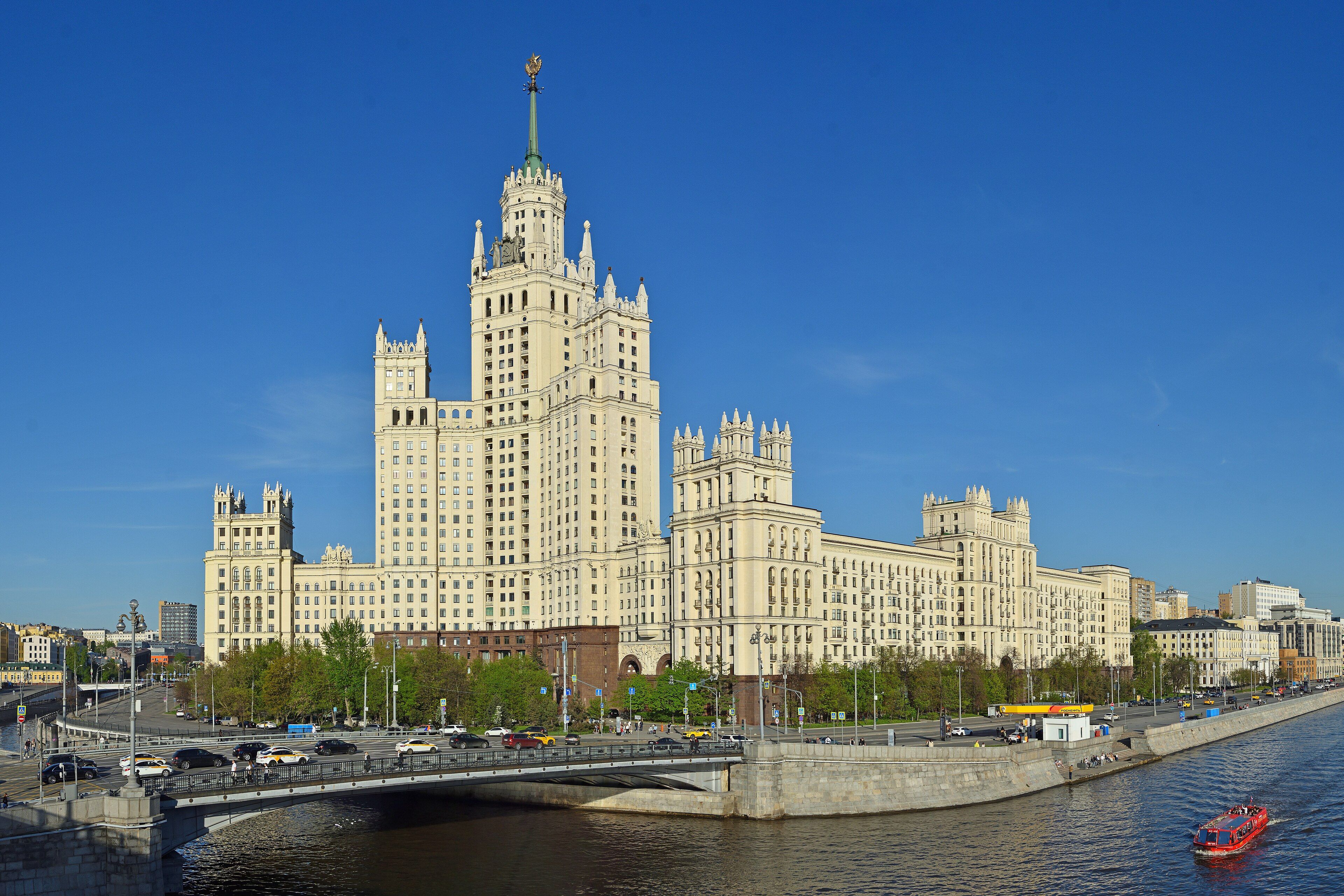 Kotelnicheskaya Embankment Building
4
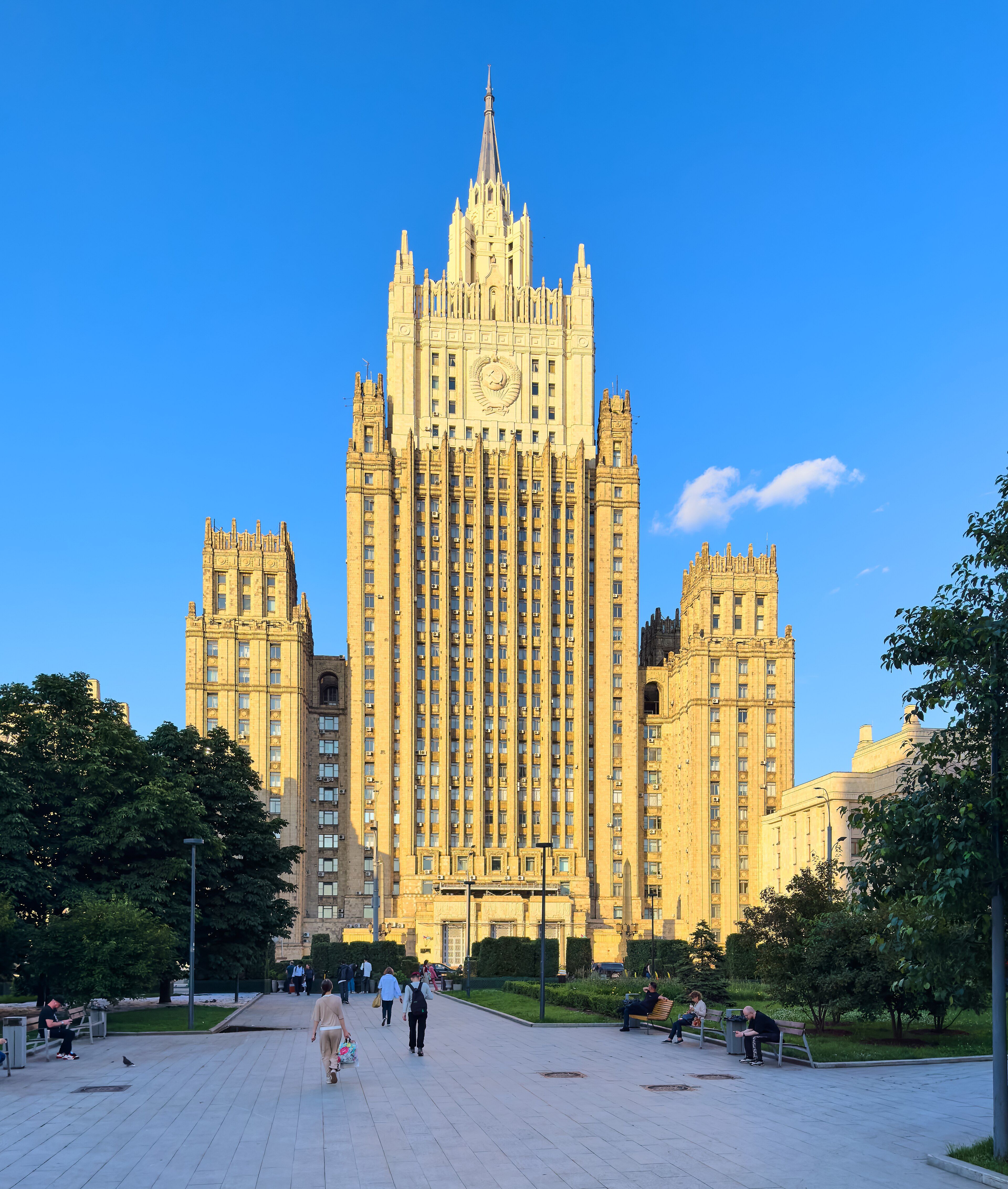
Ministry of Foreign Affairs Building
6
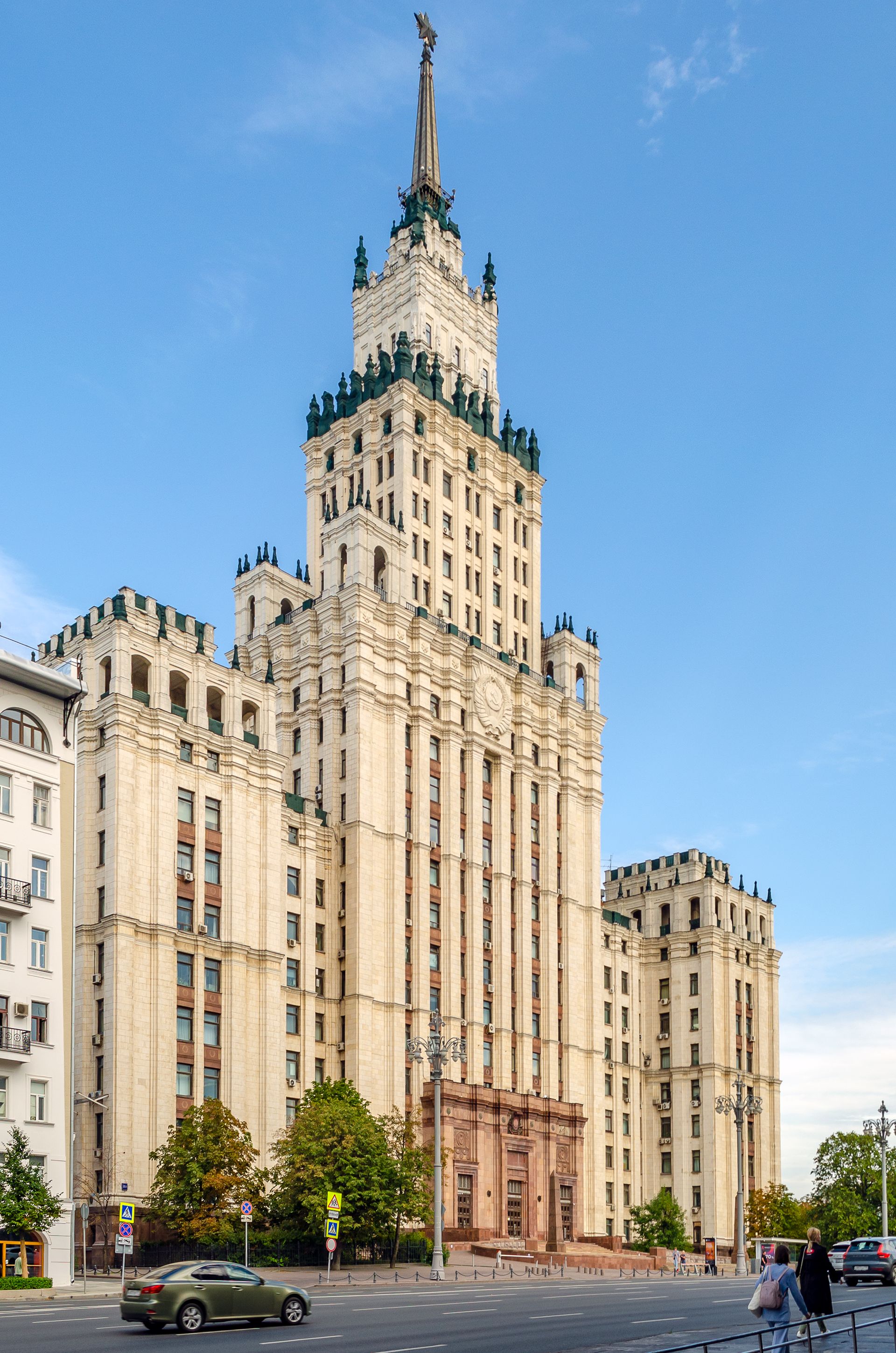 Red Gates Building
7
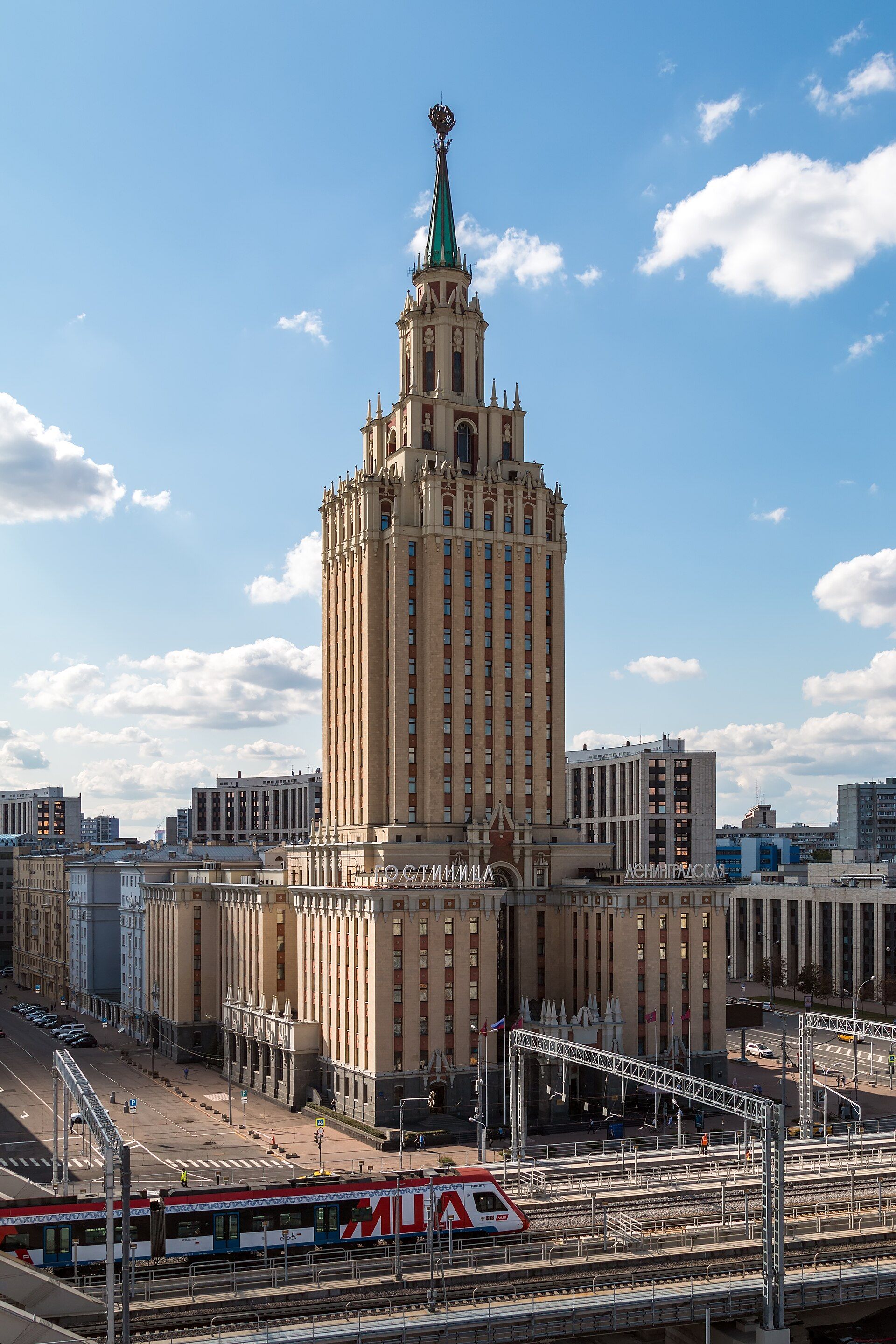 Hotel Leningradskaya
It is an apartment building, and only residents are allowed into the stairwells. The cafés and shops on the ground floor are open, and apartments in the building can be rented by the night.
Yes, the exterior shots in the film show the Kudrinskaya Square building. The interiors of the professor’s apartment were filmed in the Kotelnicheskaya Embankment skyscraper.
Its apartments went mostly to aviation industry workers, aircraft designers and pilots.
Take the metro to Barrikadnaya on the purple line. The skyscraper is right opposite the exit. From Krasnopresnenskaya it is about a 5 minute walk.
After it was built, the apartments went to test pilots, aircraft designers and aviation industry workers.
About 450 apartments. The first residents moved in in April 1955.