Closed
The ministry itself
It is a working ministry with controlled access. There are no tours inside for tourists, and the halls and offices can only be seen in official photographs.

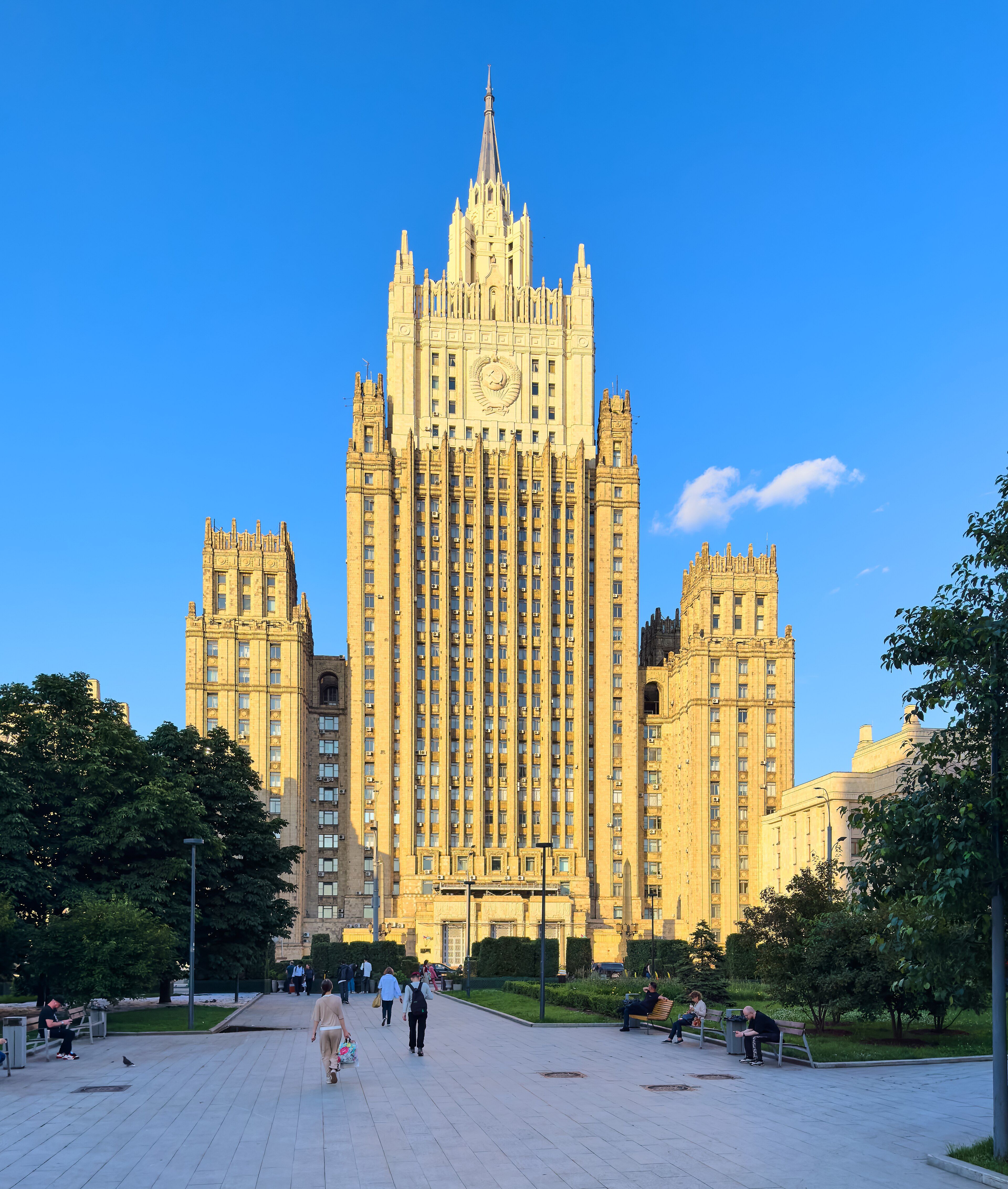
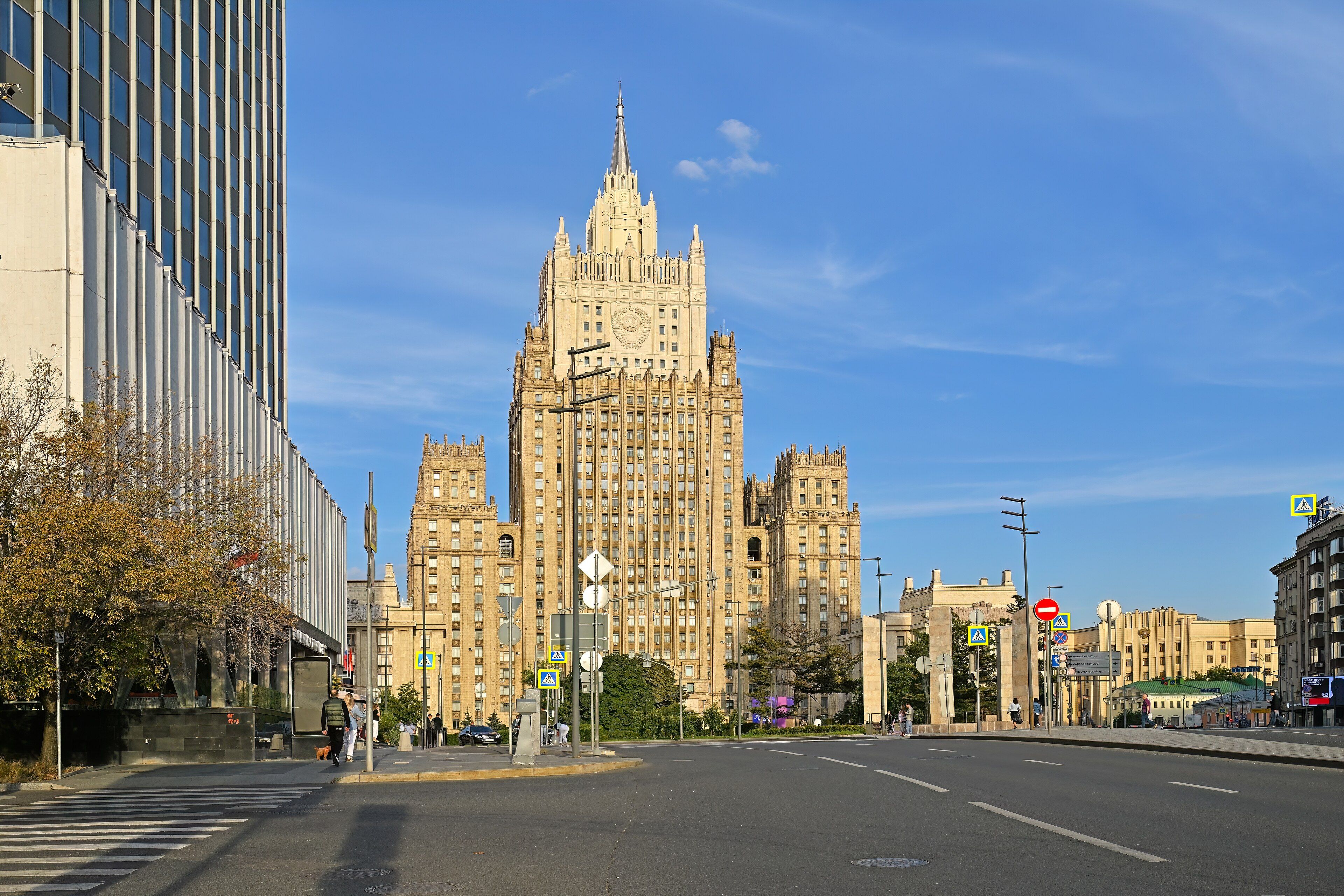
The skyscraper on Smolenskaya Square, home to the Ministry of Foreign Affairs since 1953. You cannot get inside, but from outside it is one of the most austere and striking of the sisters.
Outside
The Foreign Ministry skyscraper on Smolenskaya Square © Vyacheslav Bukharov, CC BY-SA 4.0
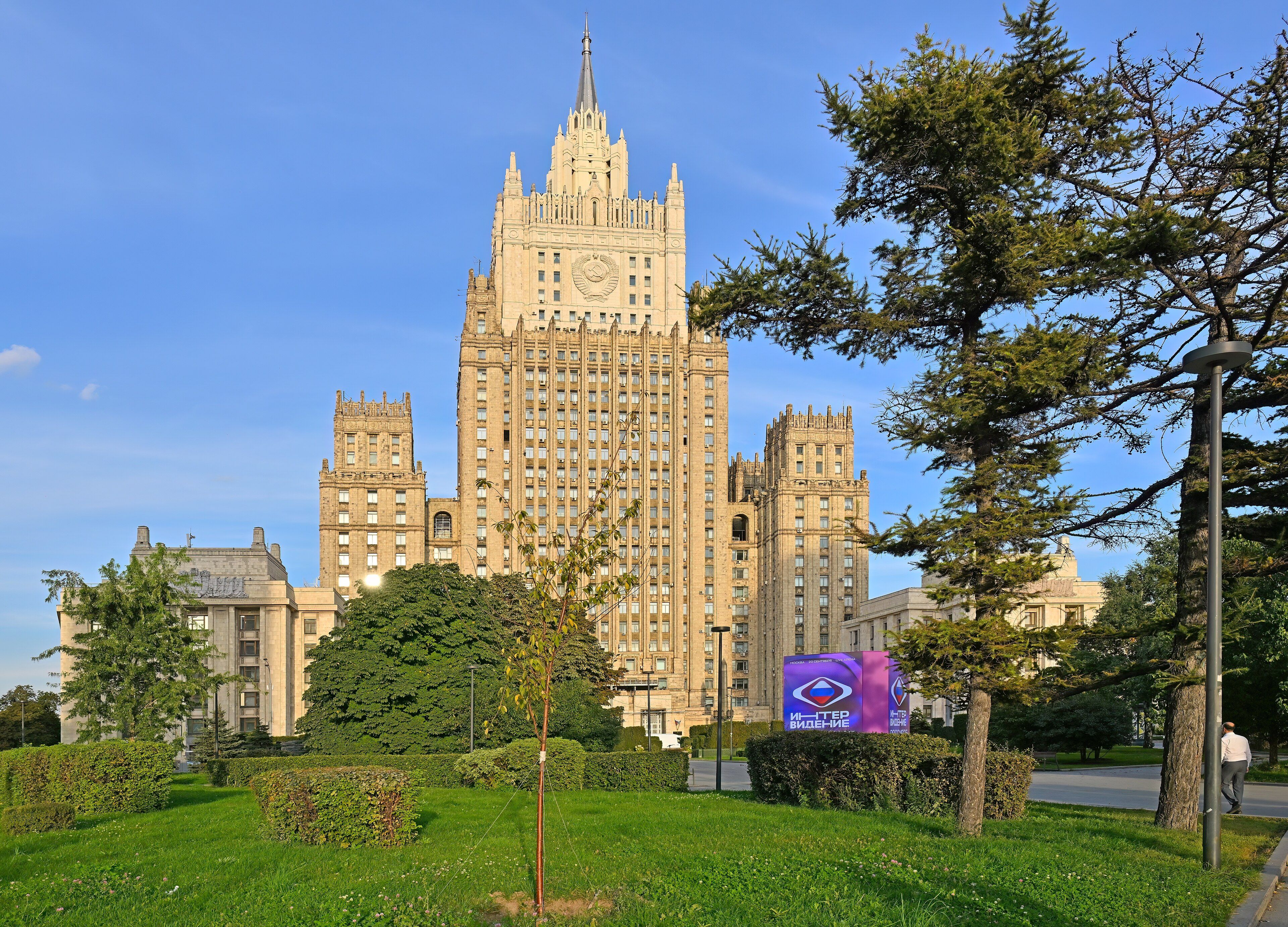
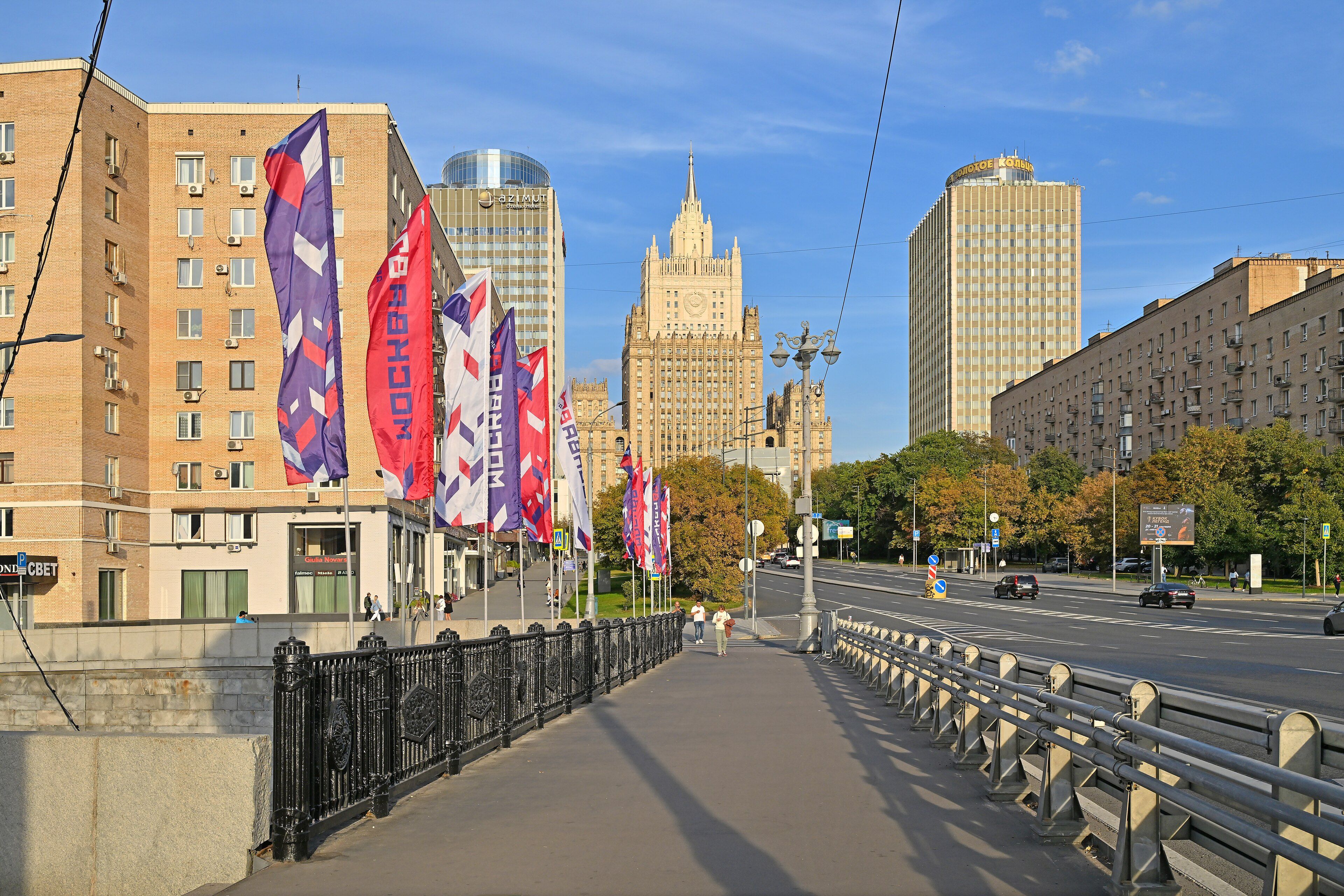
The Foreign Ministry skyscraper at the end of the street © Юрий Д.К., CC BY 4.0
The Foreign Ministry skyscraper among the trees © Юрий Д.К., CC BY 4.0
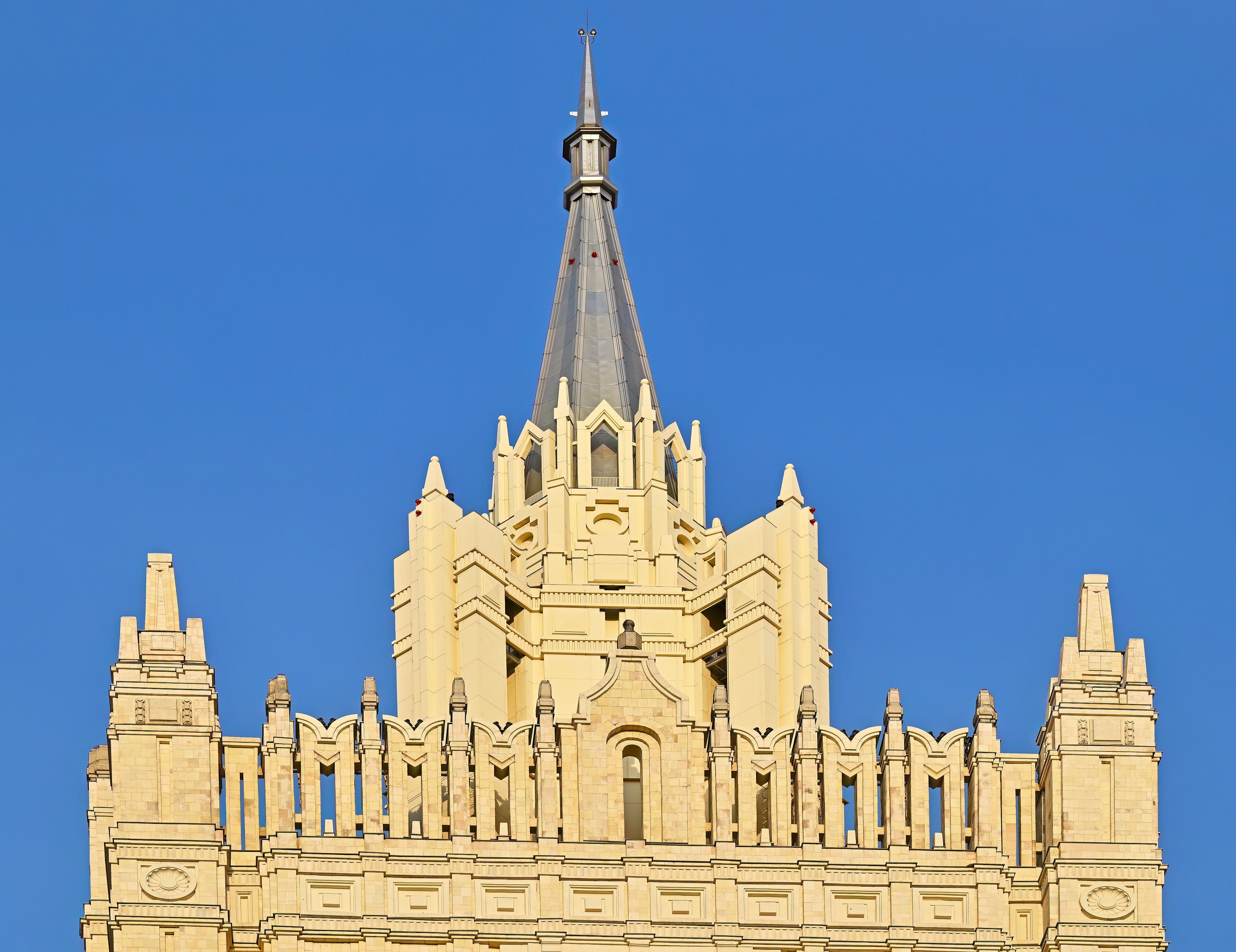
The top of the tower and the spire without a star © Юрий Д.К., CC BY 4.0
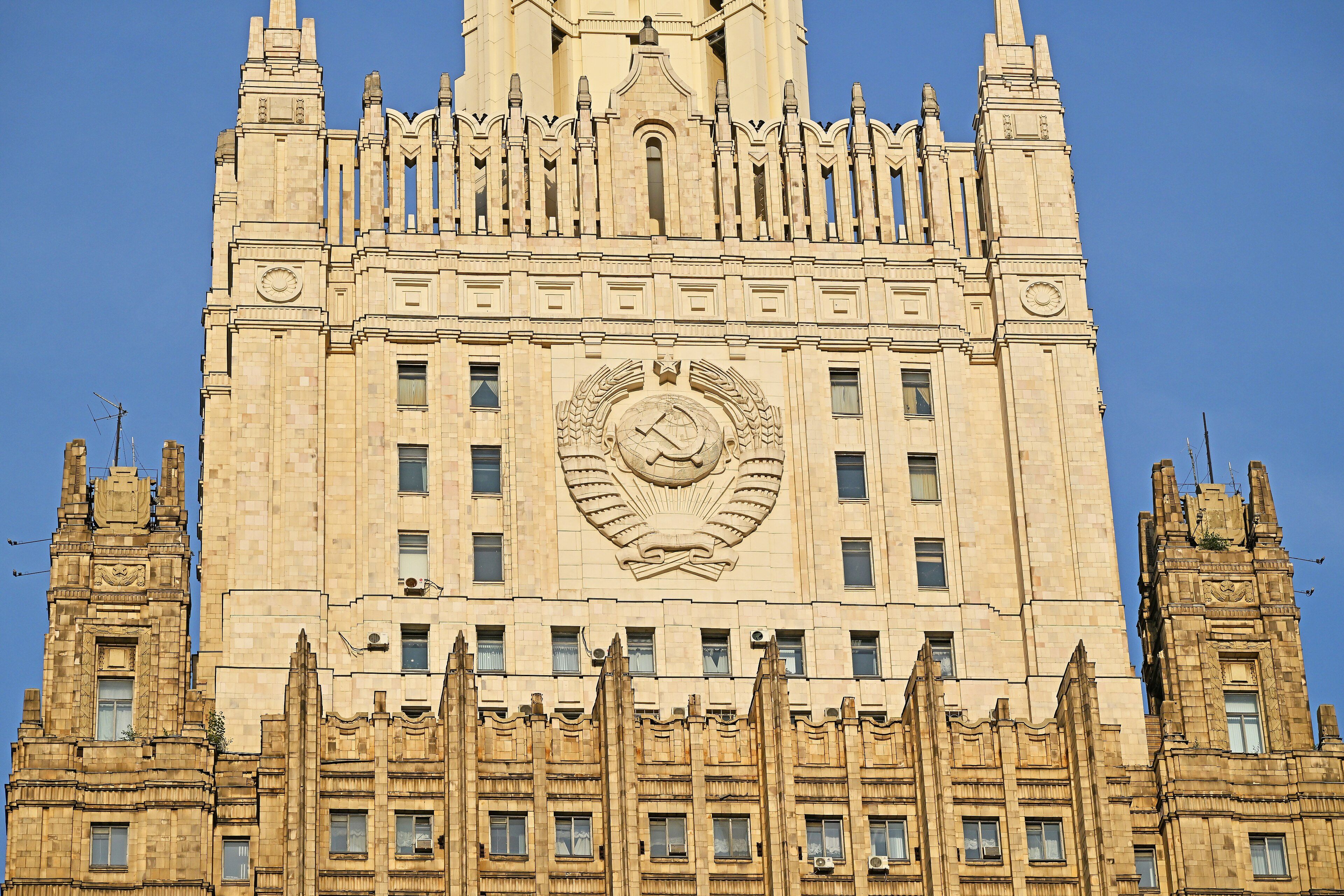
The Soviet coat of arms on the Foreign Ministry facade © Юрий Д.К., CC BY 4.0
History
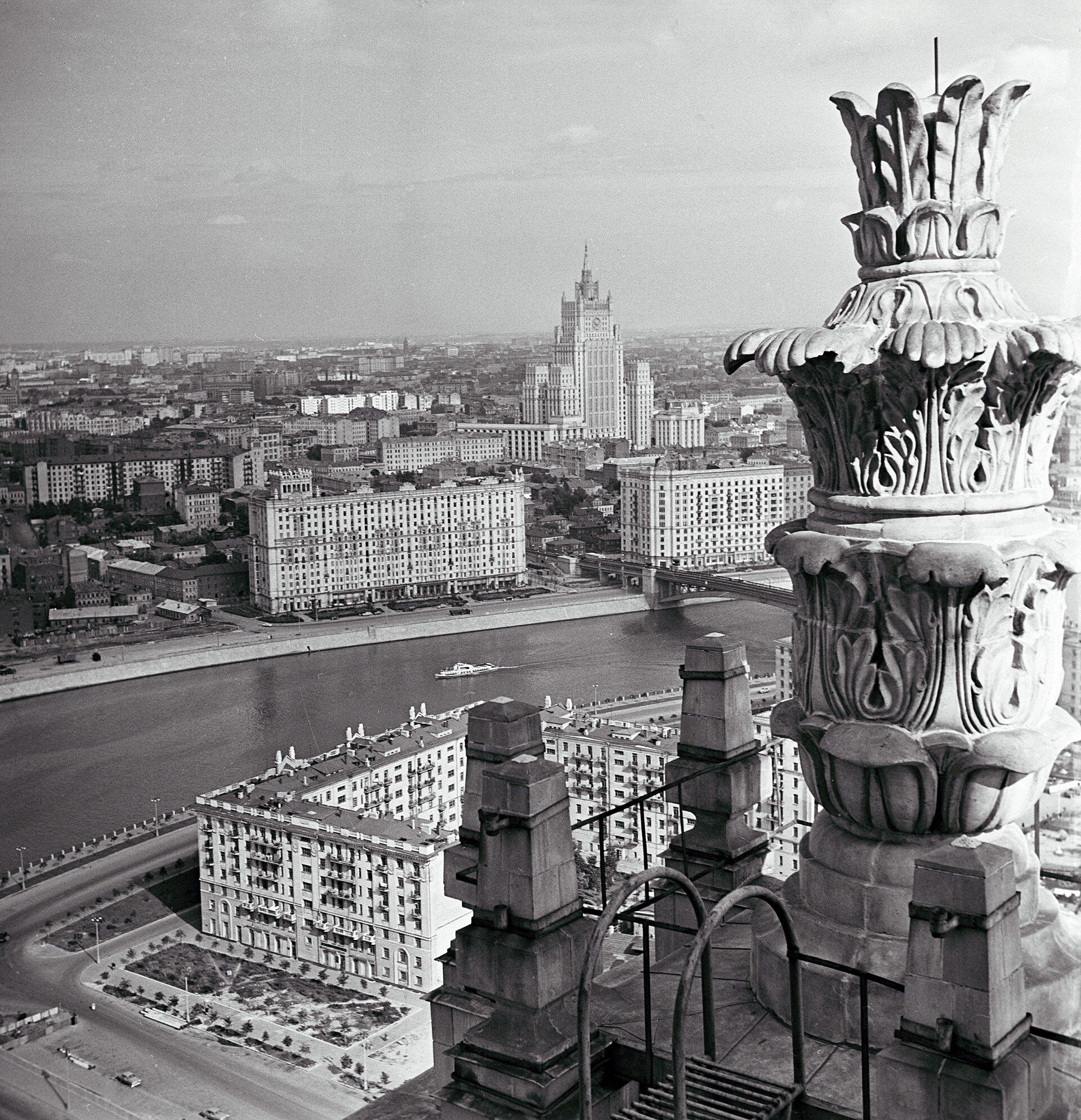
The Foreign Ministry building between 1959 and 1966 © Яков Гольдин, CC BY 4.0
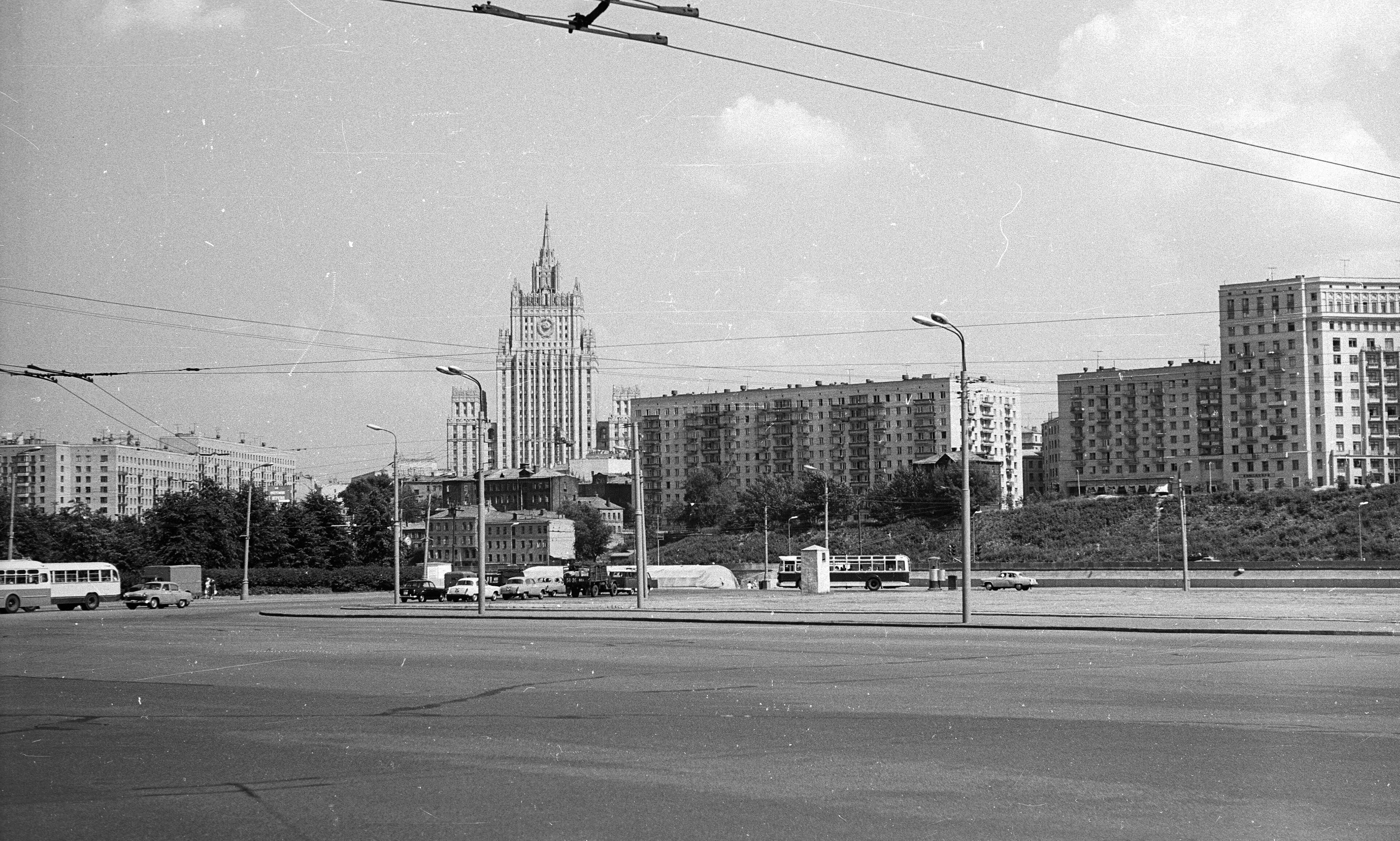
The Foreign Ministry building between 1959 and 1966 © Fortepan, Nagy Gyula, CC BY-SA 3.0
The skyscraper was built from 1948 to 1953 for the Ministry of Foreign Affairs and the Ministry of Foreign Trade. The site chosen was on the Garden Ring by Smolenskaya Square, where the Arbat begins.
According to a well-known story, the first design had no spire and ended in a flat-topped tower. When the building was already going up, Stalin saw the design and demanded a spire like the other skyscrapers. The structure could no longer have carried a heavy stone spire, so the spire was made light, from metal sheets, and painted to match the facade.
© Яков Гольдин, CC BY 4.0The Ministry of Foreign Affairs has been in the building ever since. In Soviet times the country’s coat of arms appeared on the facade, and it is still there.
© Fortepan, Nagy Gyula, CC BY-SA 3.0The building is austere, with hardly any extra decoration. The tower rises in tiers above a broad base, and the vertical ribs of the facade make it look taller. A large Soviet coat of arms hangs above the main entrance.
The top of the spire has no star, unlike all the other skyscrapers. That makes the Foreign Ministry building easy to recognise from afar.
The ministry has been in the building since 1953, so tourists are not allowed in. But the main features can be seen from outside.
Closed
It is a working ministry with controlled access. There are no tours inside for tourists, and the halls and offices can only be seen in official photographs.
Open
A huge Soviet coat of arms hangs above the main entrance at a height of about 114 metres. Above it rises the spire, made of metal sheets and hollow inside. In 2017 it was replaced with a new one that copies the original.
 By booking
Two architects designed the building, and since 1953 Soviet and then Russian foreign ministers have worked here.
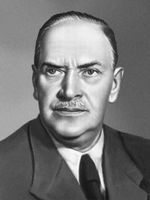
Architect
Co-author of the Palace of Soviets and the Lenin Library. He designed the Foreign Ministry building together with Mikhail Minkus.
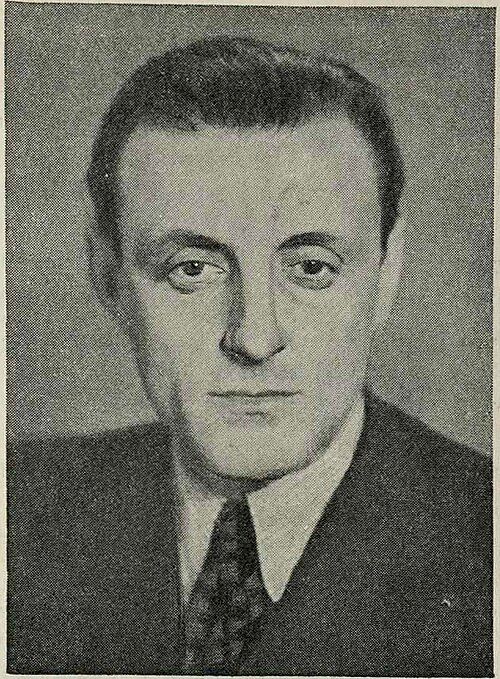
Architect
After the war he worked on plans for Smolenskaya Square. The Foreign Ministry skyscraper became his most important building.
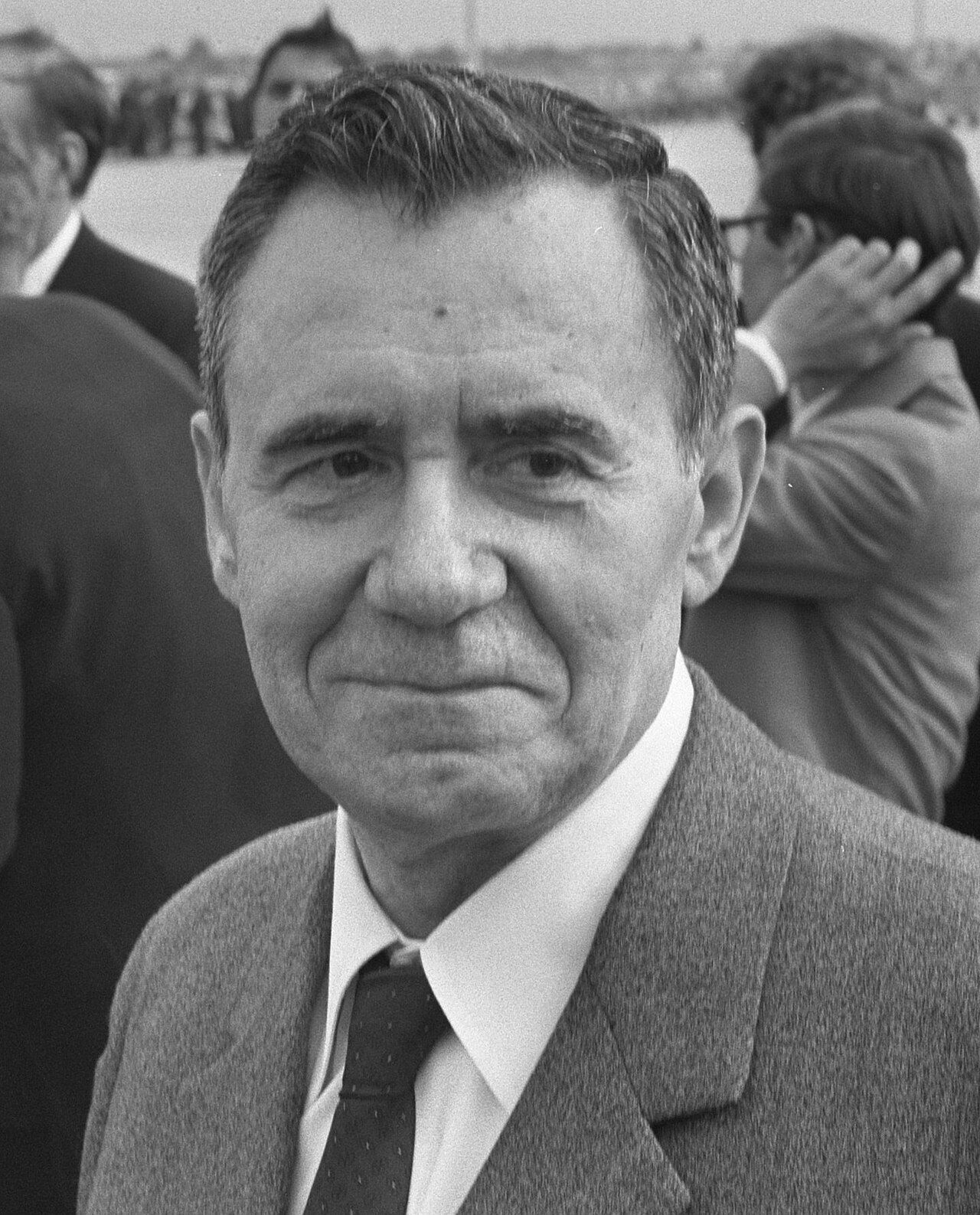
Minister of Foreign Affairs
He ran the ministry from 1957 to 1985, almost three decades, and worked in this building longer than any other minister.
The skyscraper often appears in panoramas of Moscow, and in the earliest film it was shown straight from the construction site of a neighbouring sister.
The heroes climb to the 35th floor of Hotel Ukraina while it is still being built, and from there they look out at the newly completed Foreign Ministry building.
The design had no spire. It was added on Stalin’s orders when the building was already going up. After Stalin’s death Gelfreikh proposed removing the spire, but, as the story goes, Khrushchev refused and called it a monument to Stalin’s folly.
The building is classified, which feeds rumours of underground passages from the ministry to the metro and straight to the Kremlin. There is no public evidence for them.
When the old spire was due to be dismantled in 2016, the work had to be postponed. A family of falcons had settled on it, and dismantling began only after the chicks had grown up and flown away.
The building stands at a junction of wide streets, so it is easy to photograph from different sides.
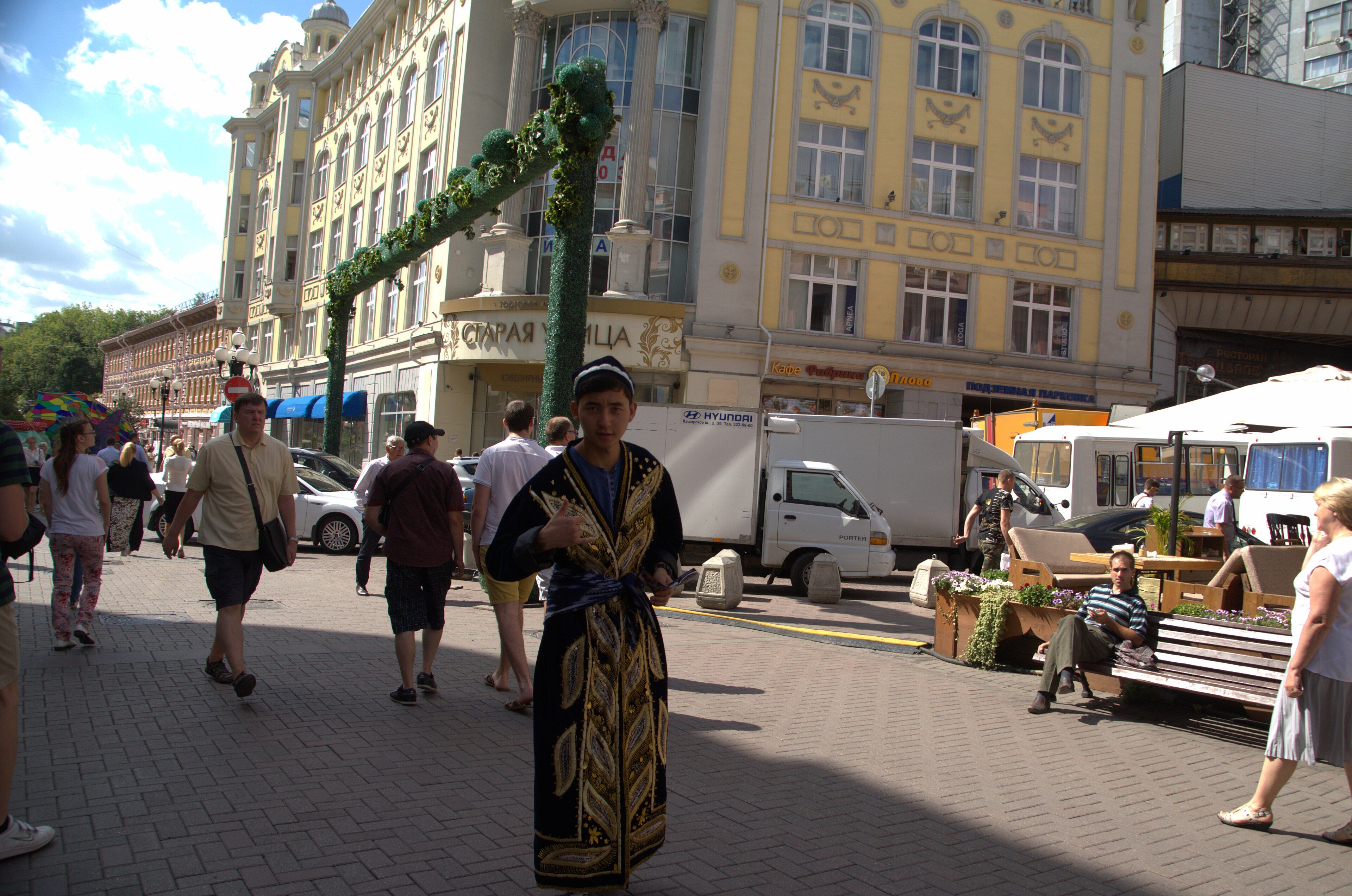
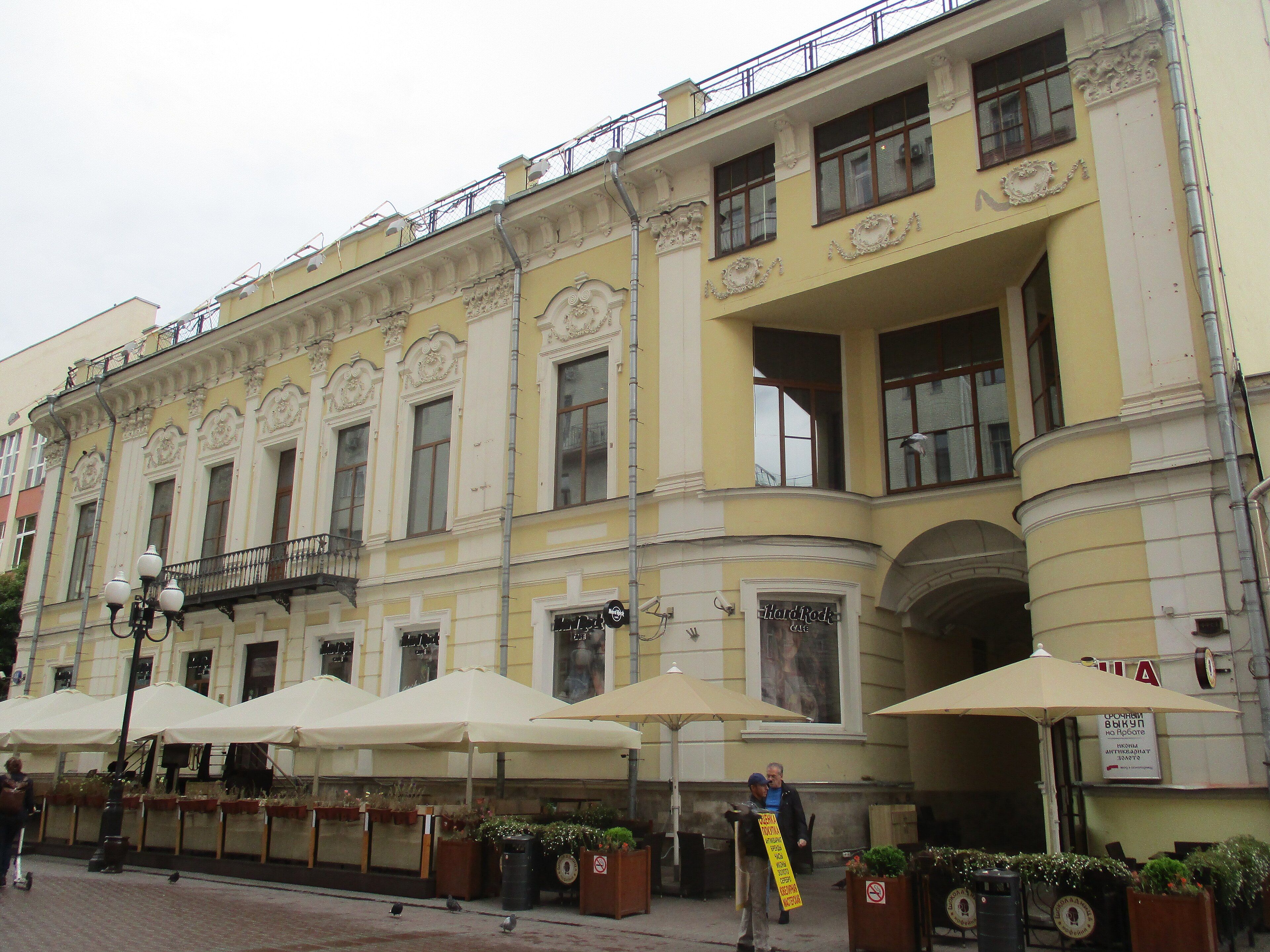
From the start of the pedestrian Arbat the skyscraper closes the view down the street. A good shot in the evening when the street lamps come on.
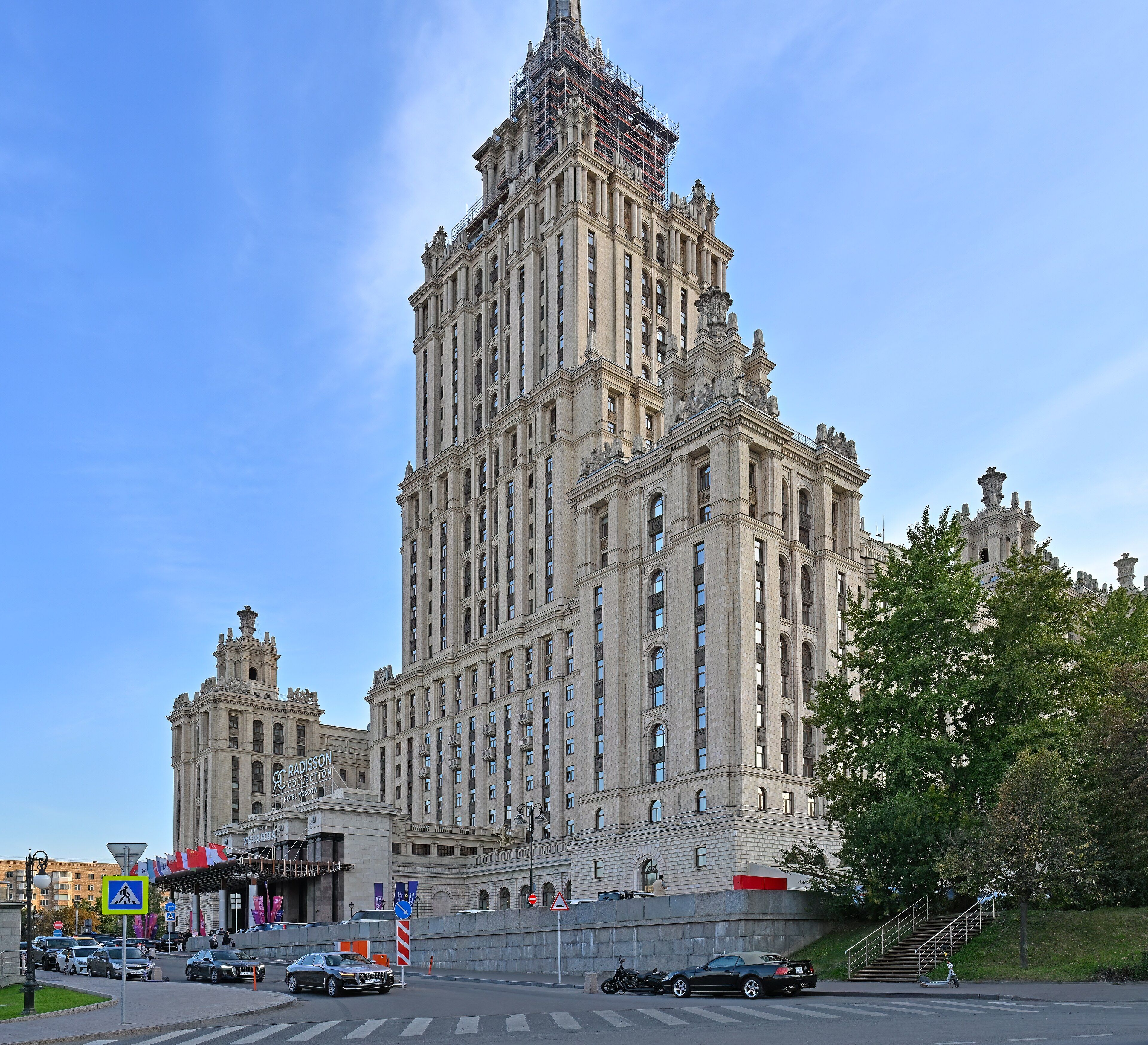
From the green side of the building the tower looks lovely among the trees. From here you can see both the spire and the coat of arms over the entrance.

From the bridge you see the skyscraper along Smolenskaya Street, with the Moskva River and Hotel Ukraina behind you.
Around the Arbat there are many hotels and apartments for every budget.
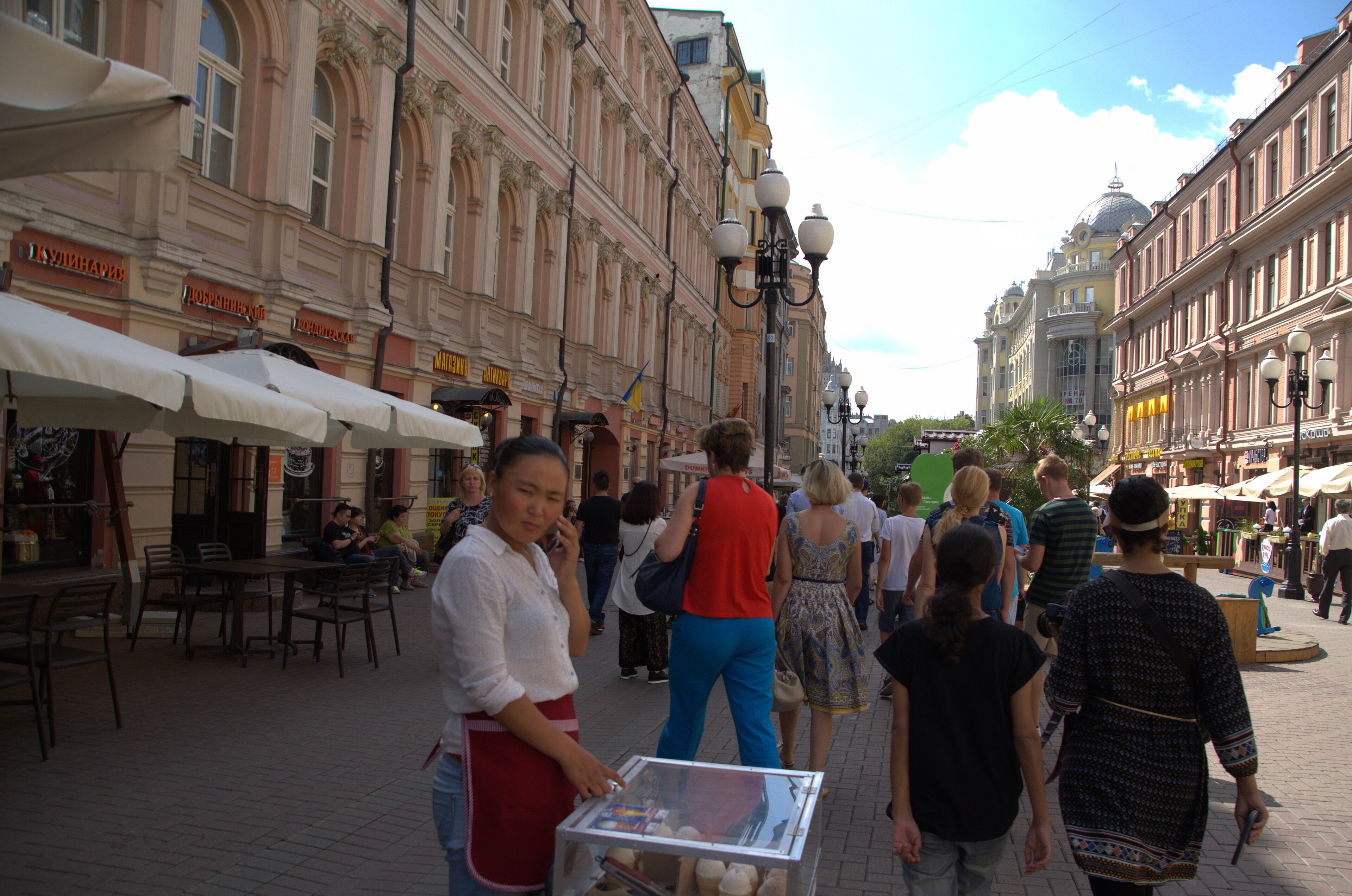
The very heart of old Moscow, a 20 minute walk from the Kremlin.
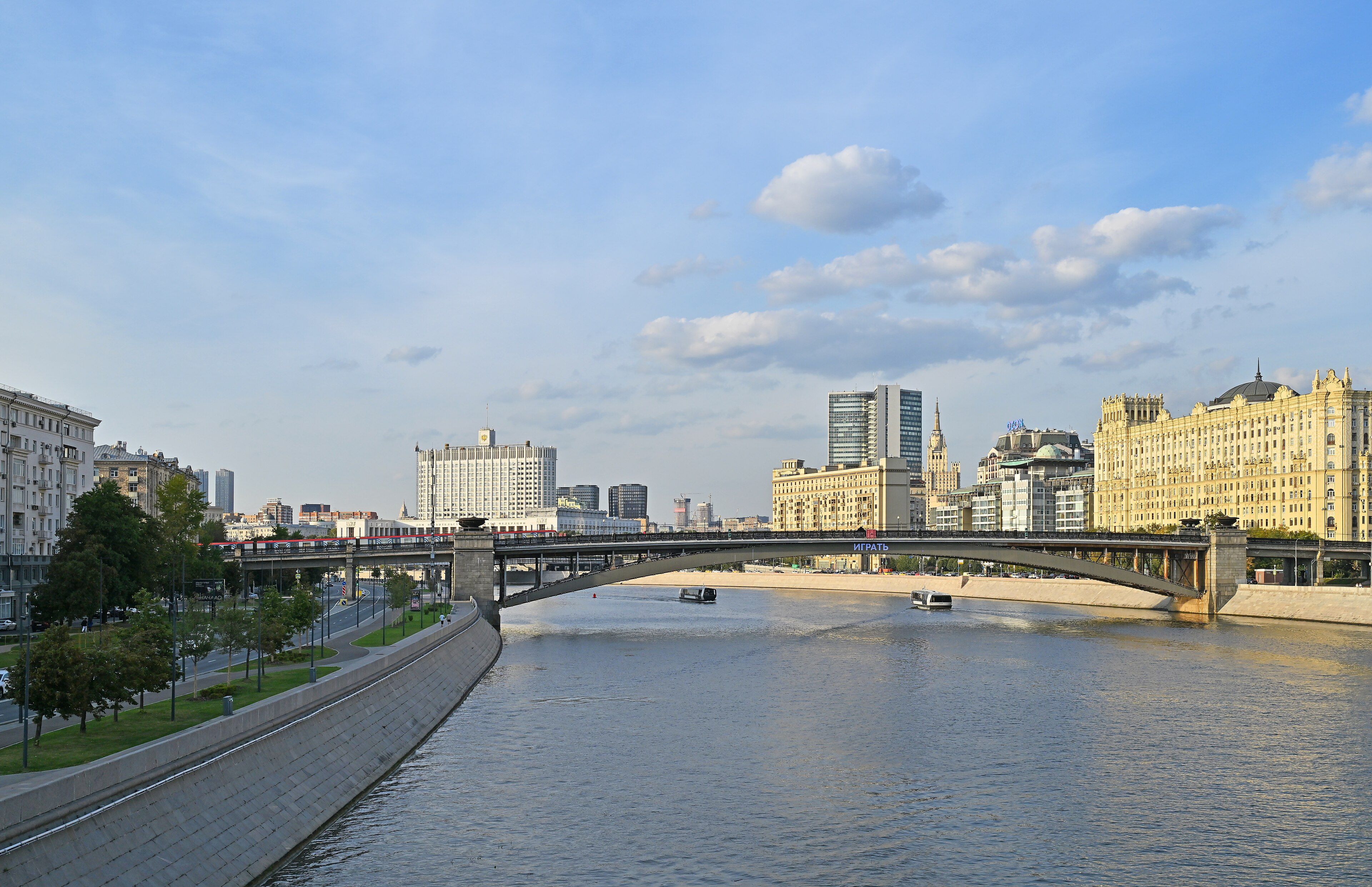
Next to the skyscraper, the metro and the Garden Ring.
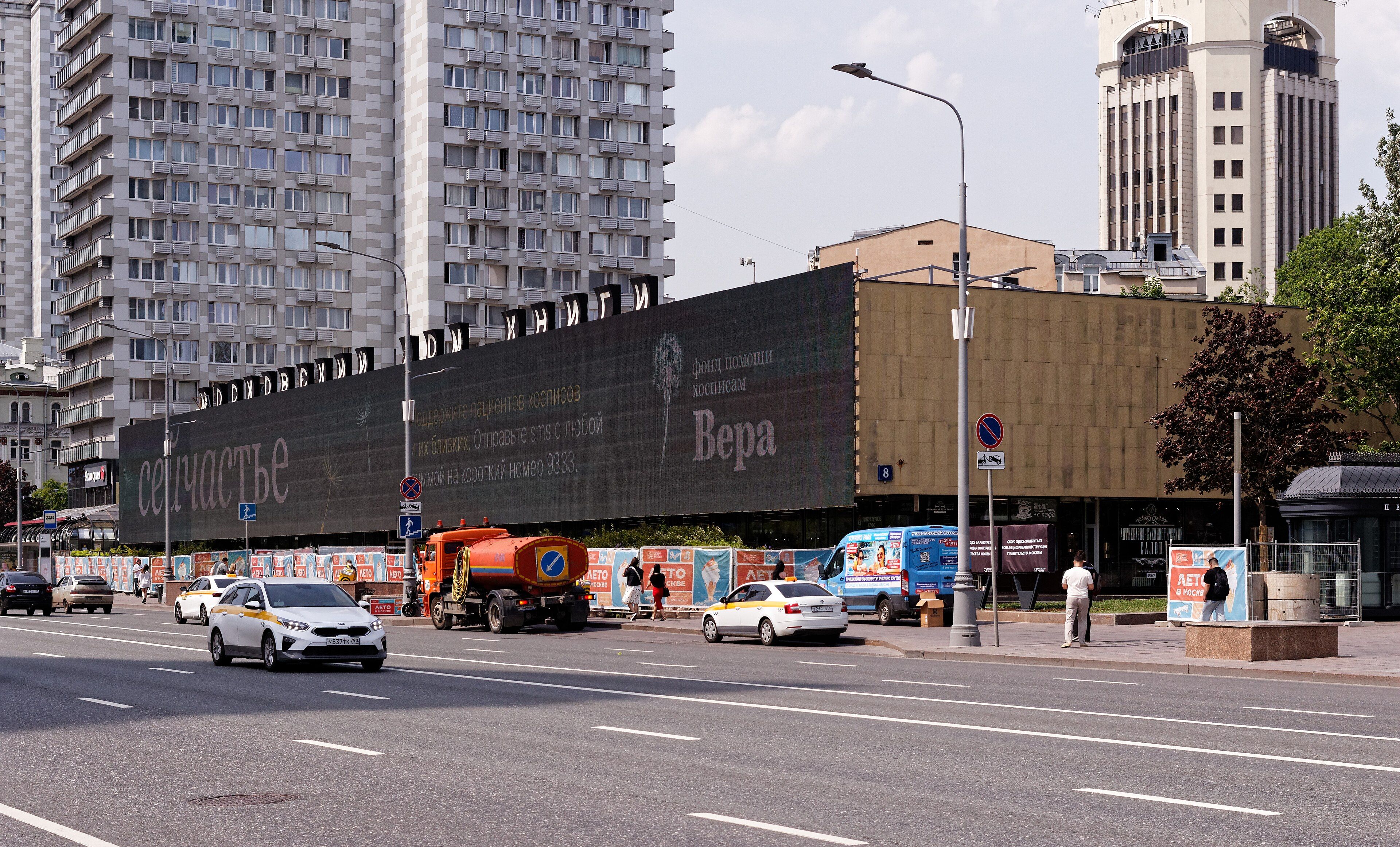
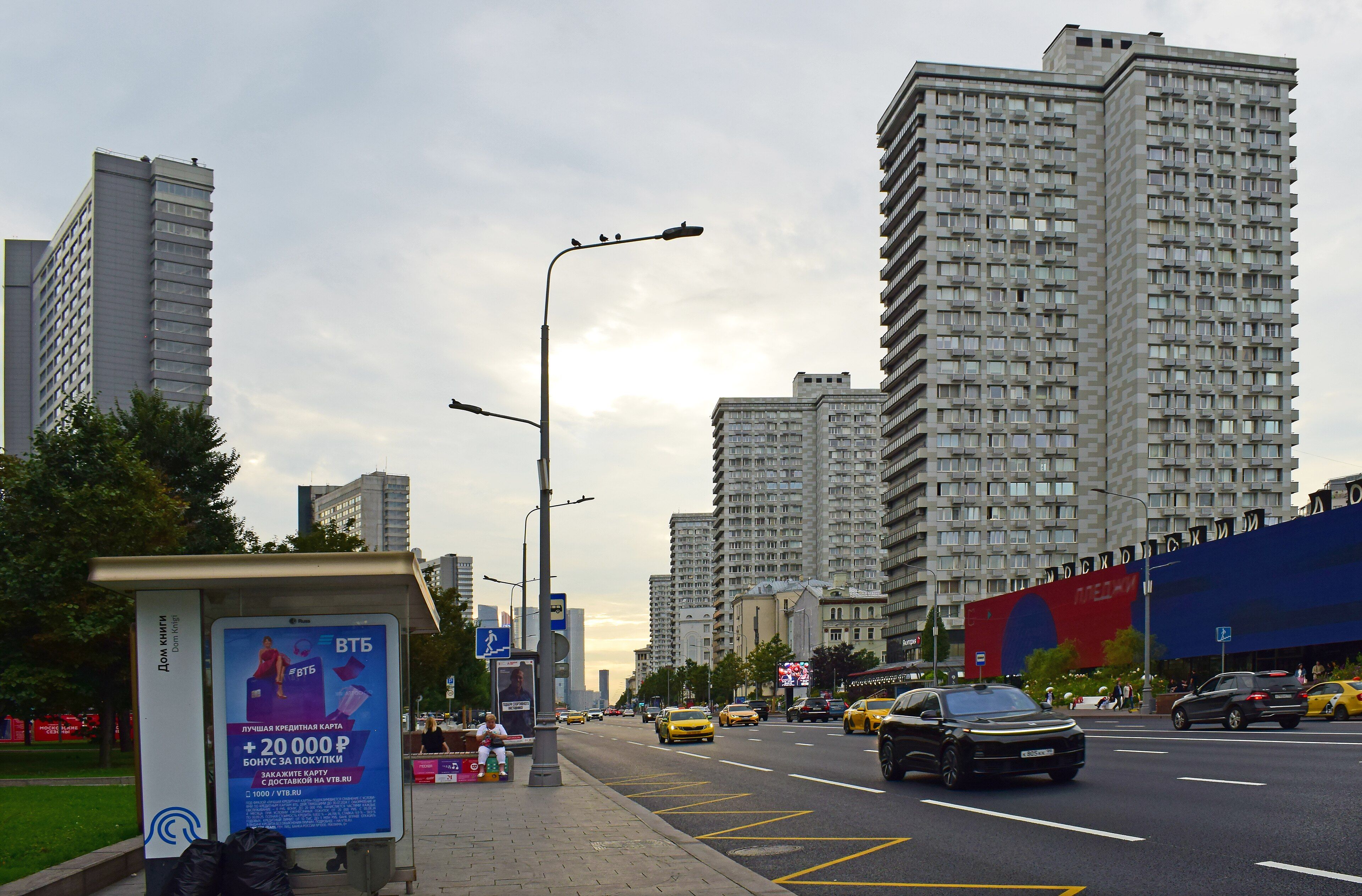
An avenue 10 minutes from the skyscraper, with cafés, shops and the metro nearby.
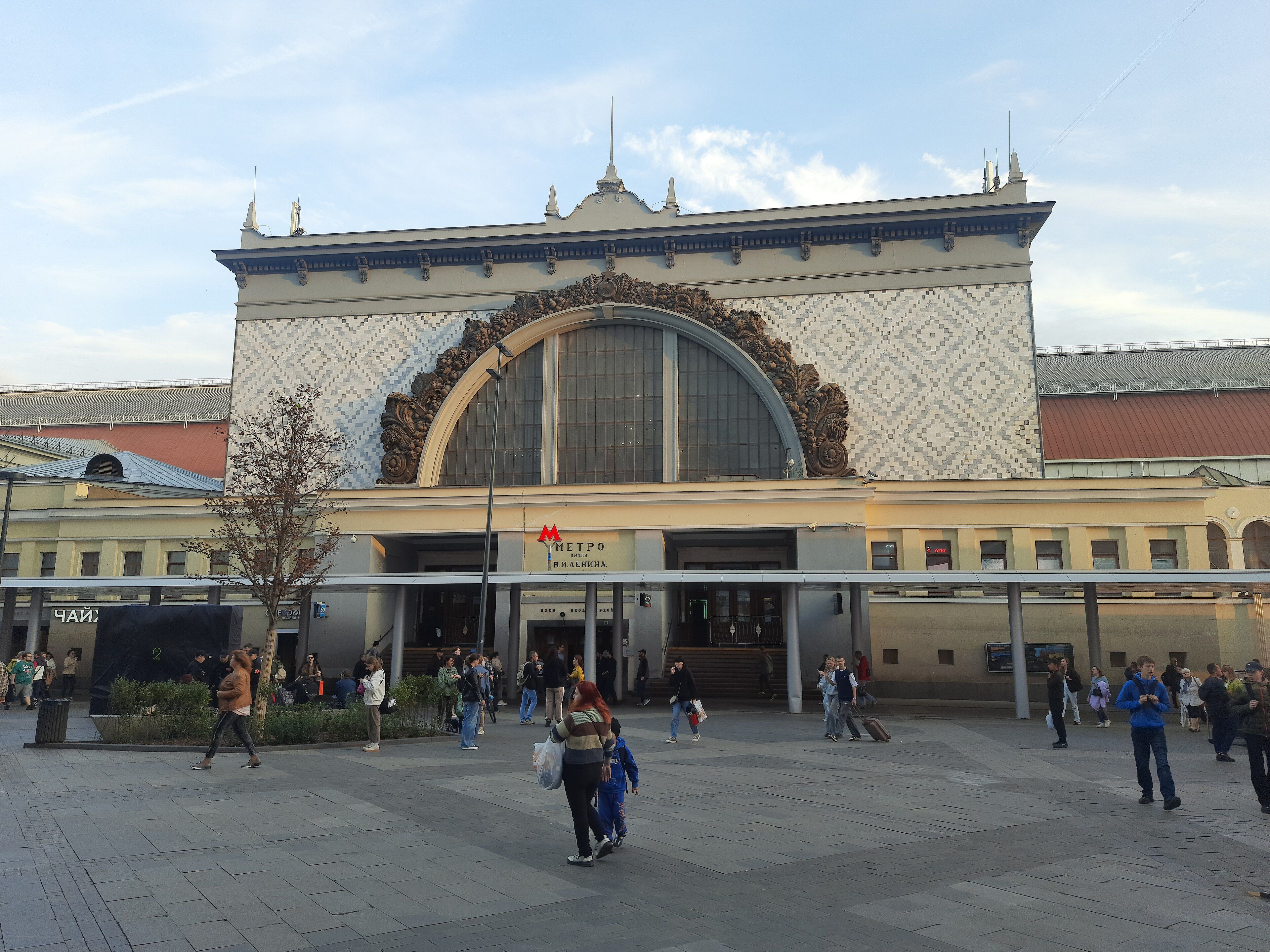
Across Borodinsky Bridge, handy for the Aeroexpress to Vnukovo.
Walking times are from the skyscraper.
The map loads when you tap the button. This keeps the page fast.
Russia, Moscow, Smolenskaya-Sennaya Square 32/34
3Smolenskayaabout 3 minutes
Metro line 3 (blue).
4Smolenskayaabout 7 minutes
Metro line 4 (light blue).
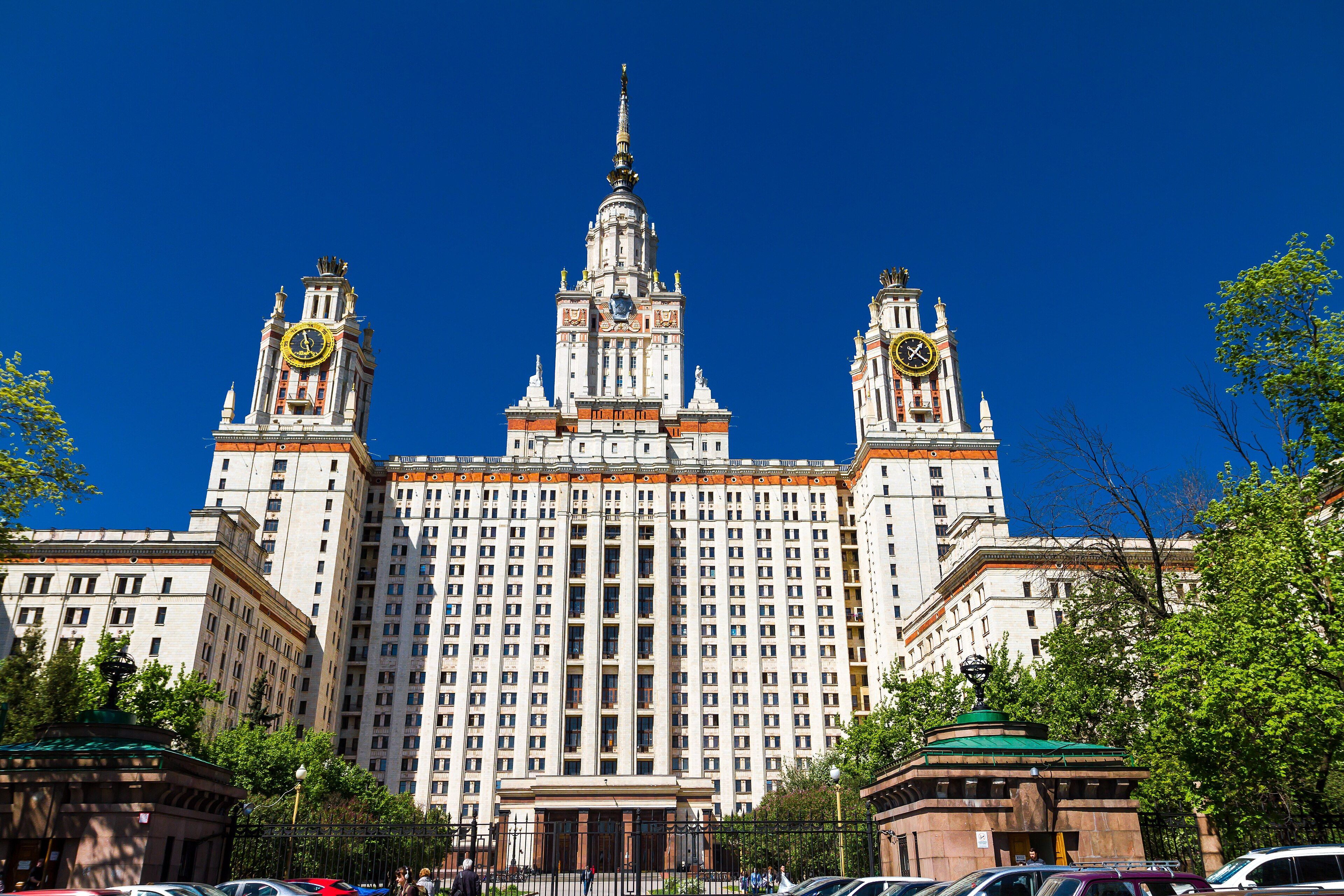 Moscow State University Main Building
2
Hotel Ukraina
3
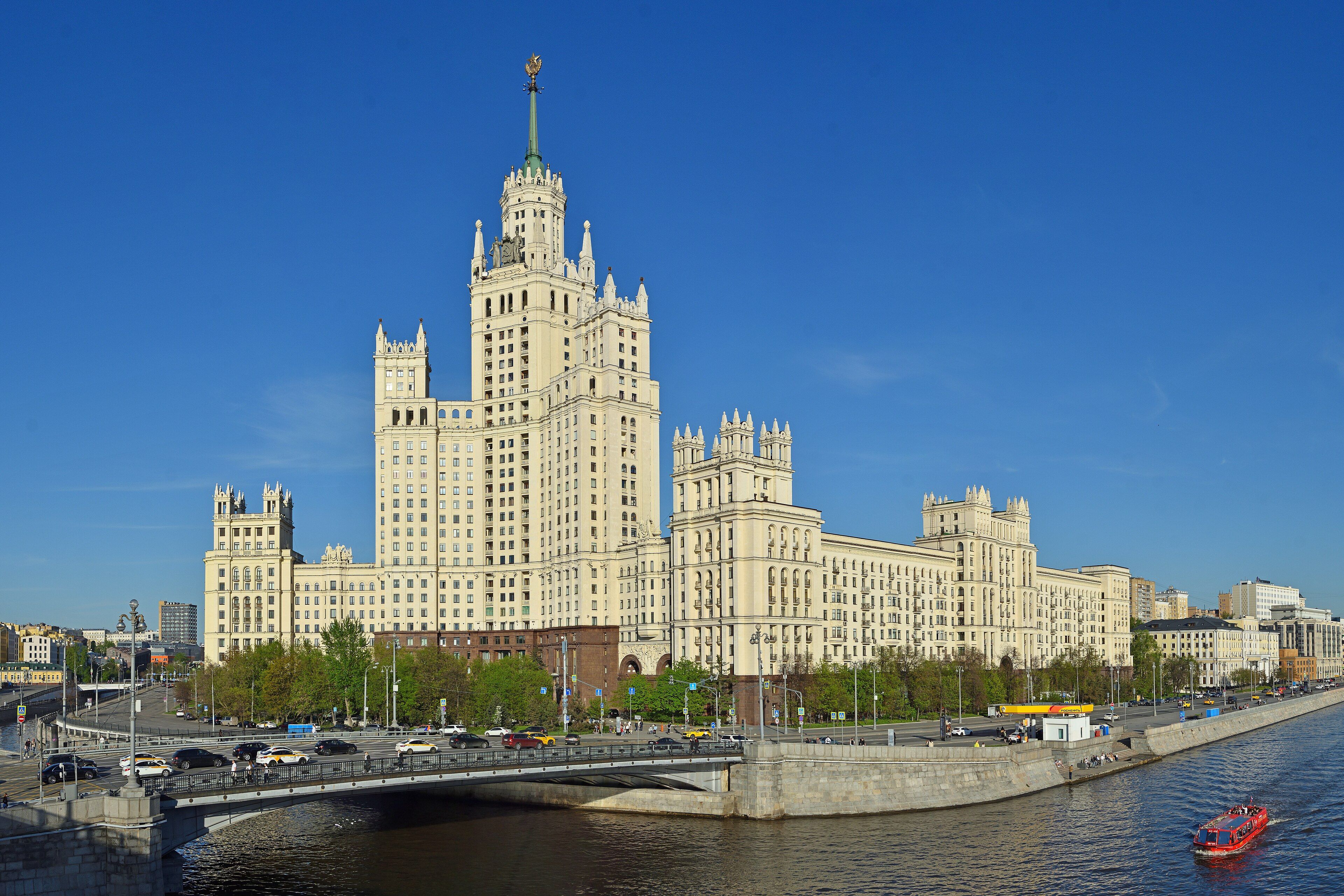 Kotelnicheskaya Embankment Building
5
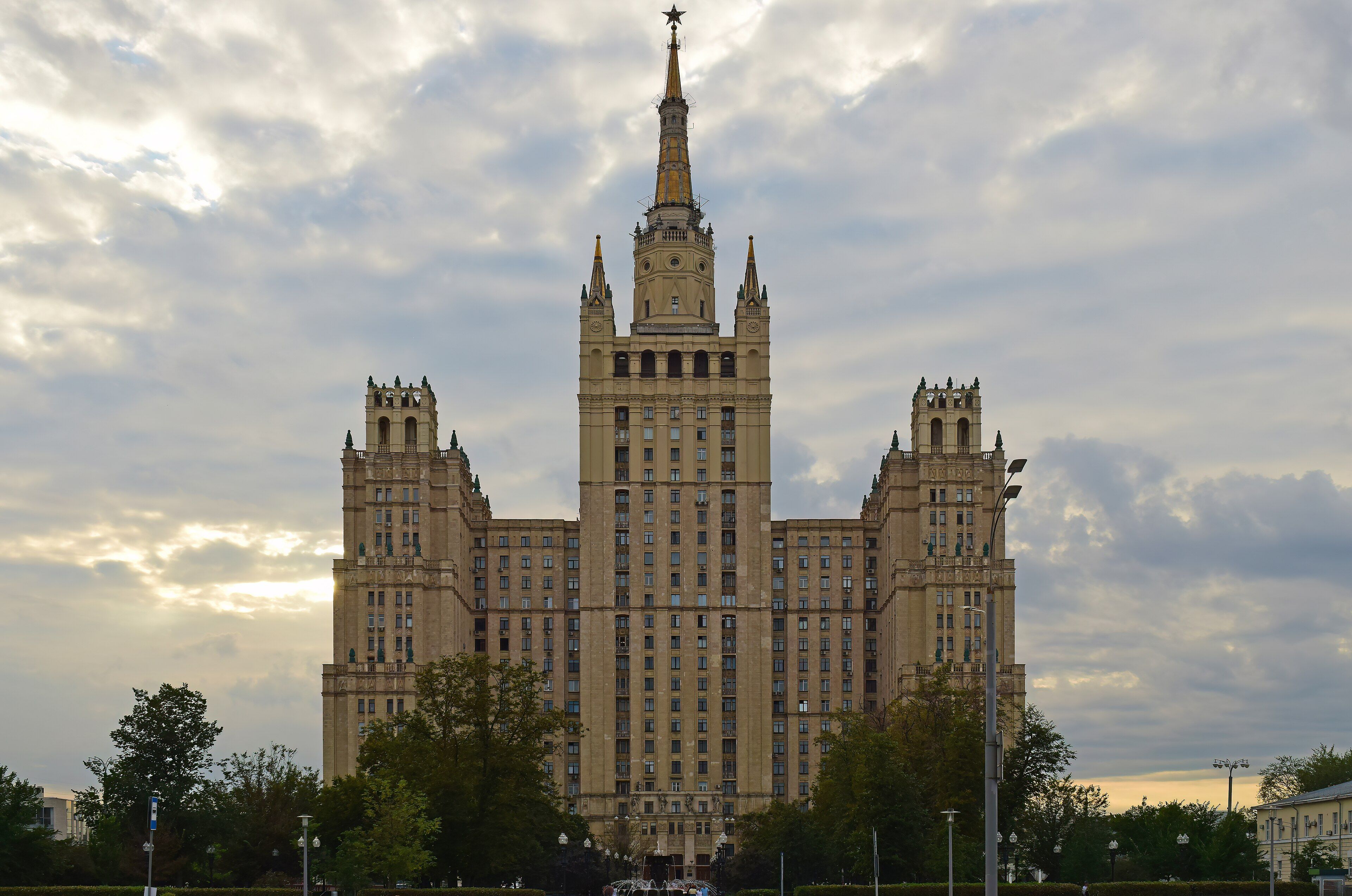 Kudrinskaya Square Building
6
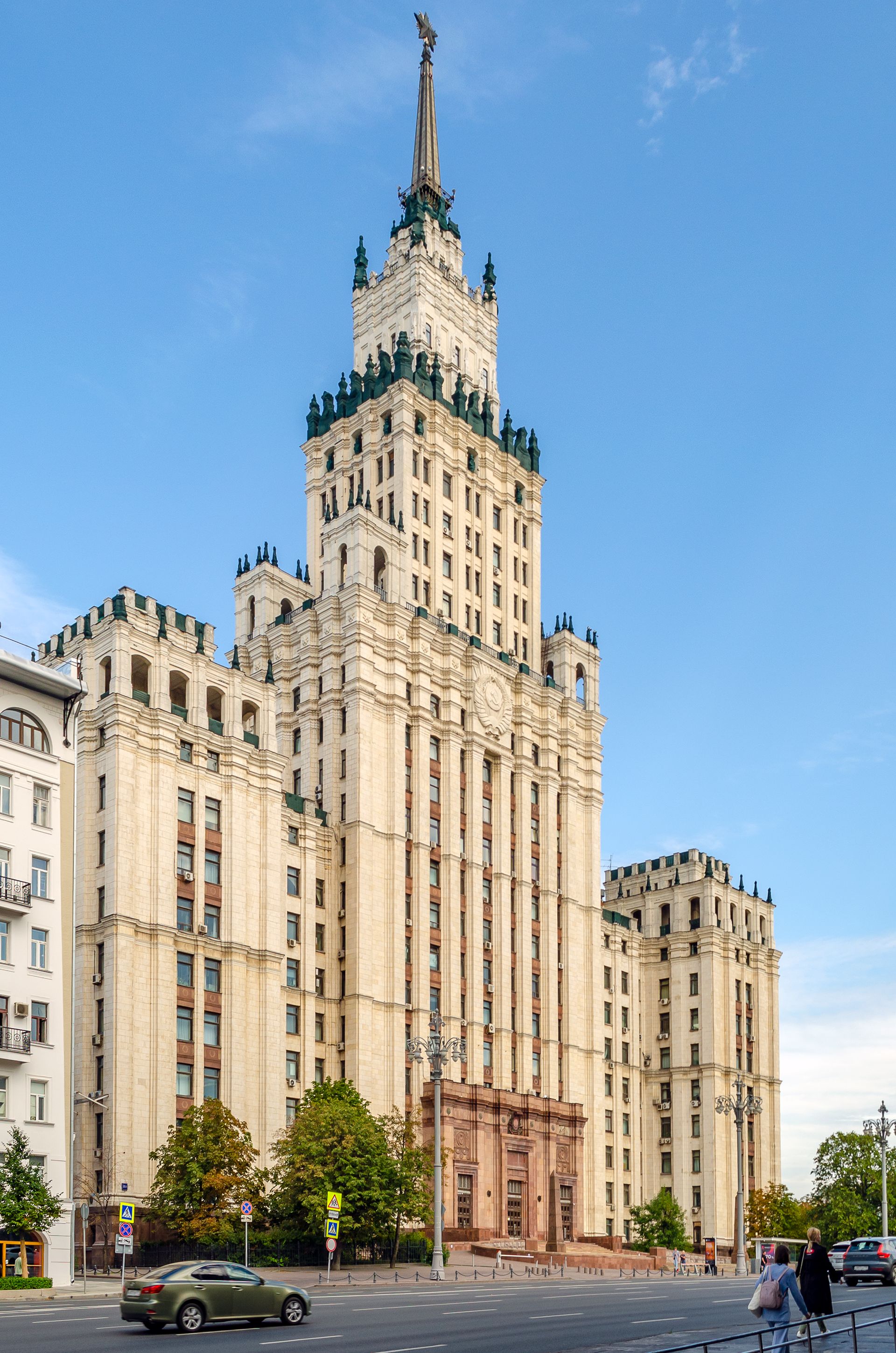 Red Gates Building
7
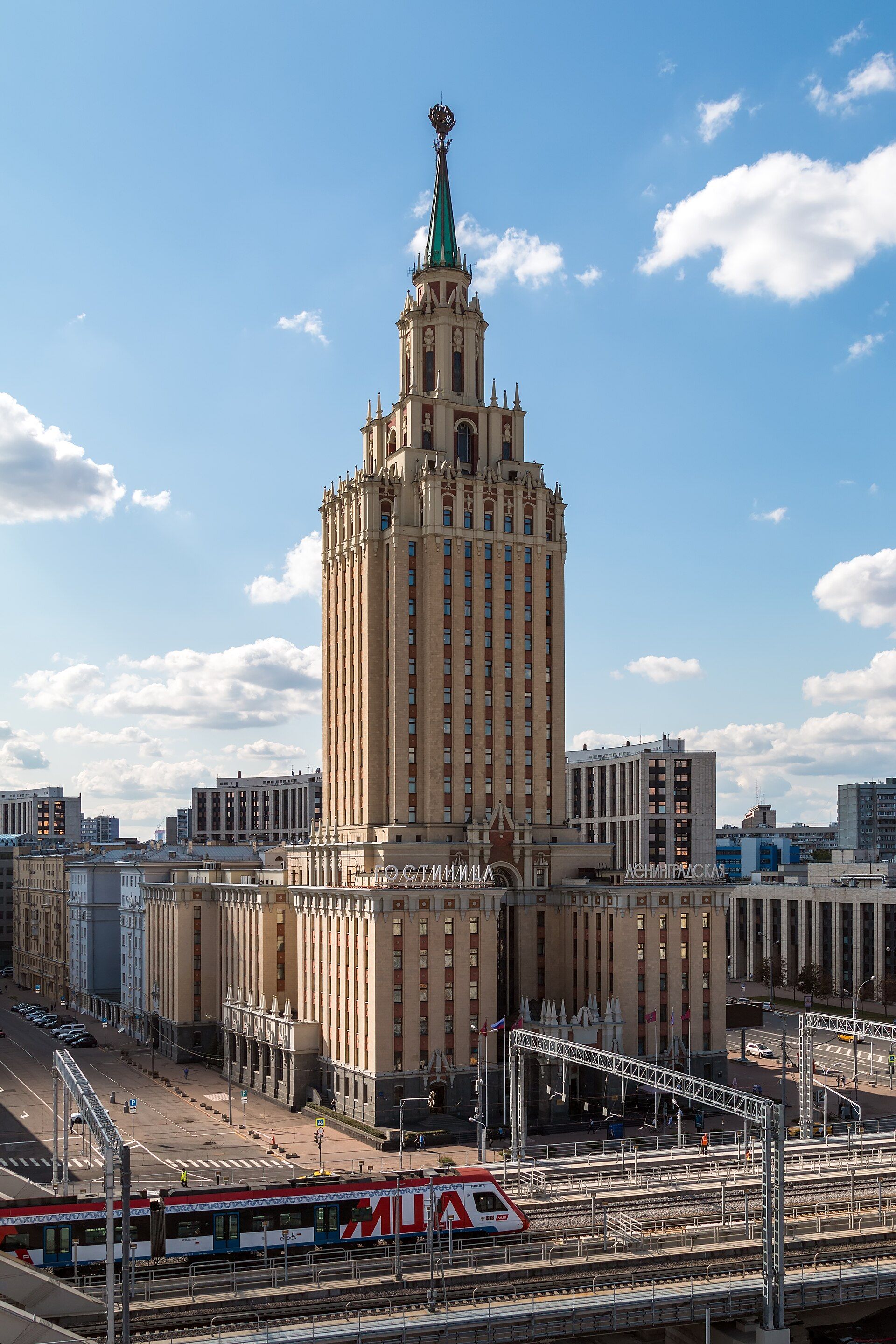 Hotel Leningradskaya
No. It is a working ministry and tourists are not allowed in. You can look at the building from outside from Smolenskaya Square and the Arbat.
The spire was added during construction and made light, from metal sheets. No star was put on it, so the Foreign Ministry is the only one of the seven skyscrapers without a star.
172 metres including the spire, with 27 floors.
Take the metro to Smolenskaya on the blue line. The exit leads straight onto the square by the skyscraper.
From 1948 to 1953. It was the first of the seven skyscrapers to be completed, and the ministry has been here since 1953.
When it was built it had 28 lifts, 18 of them high-speed.